Recipe Overview
Yield: 1 large loaf (10–12 slices)
Skill Level: Beginner
Total Time: About 3 hours (mostly hands-off)
Best Uses: Sandwiches, toast, breakfast bread, garlic bread
Ingredients and Their Purpose
Flour
4 cups (512 g) unbleached all-purpose flour or bread flour
Flour is the structural backbone of bread. All-purpose flour creates a softer crumb, while bread flour gives a slightly chewier texture due to higher protein content.
Unbleached flour is preferred because it retains more natural flavor and structure.
Salt
2 teaspoons (10 g) kosher salt
Salt strengthens gluten, controls yeast fermentation, and enhances flavor. Without enough salt, bread tastes flat and may over-rise and collapse.
Water
2 cups (454 g) lukewarm water
(Made by mixing 1½ cups cold water with ½ cup boiling water)
Water hydrates the flour and activates yeast. Lukewarm water ensures yeast activity without killing it.
Hydration level in this recipe is intentionally high, which allows gluten to form naturally over time without kneading.
Sugar
2 teaspoons (8 g) sugar
Sugar feeds the yeast and promotes browning. This small amount does not make the bread sweet; it simply supports fermentation and crust color.
Yeast
2 teaspoons (8 g) instant yeast
Instant yeast works quickly and does not require proofing. It provides reliable rise and consistent results.
Butter
About 2 tablespoons room-temperature butter
Butter is used for greasing the pan and finishing the loaf. It softens the crust and adds richness and aroma.
Equipment Needed
- Large mixing bowl
- Wooden spoon or silicone spatula
- Plastic wrap or clean towel
- 9×5-inch loaf pan
- Pastry brush (optional)
- Wire cooling rack
No mixer. No kneading board. No special tools.
Step-by-Step Instructions
Step 1: Mixing the Dough
In a large bowl, combine flour, salt, sugar, and instant yeast. Stir briefly to distribute evenly.
Pour in the lukewarm water and stir until all flour is hydrated. The dough will look shaggy, sticky, and rough. This is exactly what you want.
Do not add extra flour. A wet dough is essential for no-knead success.
Step 2: First Rise (Bulk Fermentation)
Cover the bowl loosely and let the dough rest at room temperature for about 2 hours.
During this time:
- yeast ferments sugars
- gluten strands form naturally
- air bubbles develop throughout the dough
The dough should double in size and appear bubbly on the surface.
Step 3: Preparing the Pan
Generously butter a loaf pan. This prevents sticking and contributes to crust softness.
Lightly butter your hands and gently transfer the dough into the pan. Do not punch it down aggressively. Preserve the air pockets created during fermentation.
Smooth the top lightly.
Step 4: Second Rest
Cover the pan and let the dough rest for 30–45 minutes. This final rest allows the dough to relax and rise slightly above the rim of the pan.
This step improves crumb texture and oven spring.
Step 5: Baking
Preheat the oven to 375°F (190°C).
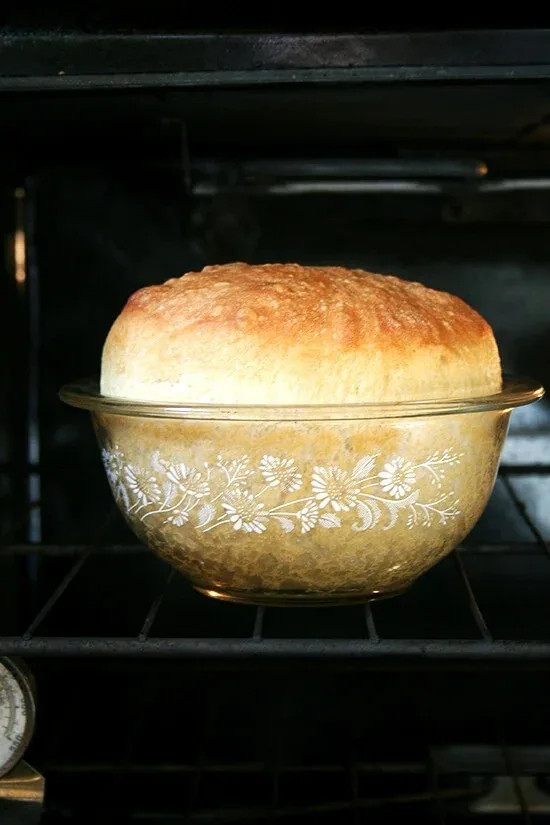
Bake the bread for 40–45 minutes. The loaf should be:
- golden brown on top
- firm to the touch
- hollow-sounding when tapped
If browning too quickly, tent loosely with foil during the last 10 minutes.
Step 6: Butter Finish
Remove bread from oven and immediately brush the top with butter. This softens the crust and adds flavor.
Step 7: Cooling
Let bread cool in the pan for 10 minutes, then transfer to a wire rack.
Cooling is essential. Cutting too early releases steam and results in gummy texture.
Texture and Flavor Profile
- Interior: Soft, airy, tender
- Crumb: Even, slightly open
- Crust: Thin, buttery, golden
- Flavor: Mild, comforting, slightly rich
Common Problems and Fixes
Dense bread:
Water too cool, yeast expired, or insufficient rise time.
Sticky interior:
Bread sliced too early or underbaked.
Flat loaf:
Over-proofed or yeast measurement inaccurate.
Variations
Milk Bread Version
Replace half the water with warm milk for extra softness.
Garlic Butter Bread
Brush with garlic butter after baking.
Herb Bread
Add 1–2 teaspoons dried herbs to dry ingredients.
Honey Butter Bread
Replace sugar with honey.
Storage Instructions
Room Temperature:
2 days, wrapped tightly.
Refrigerator:
Up to 5 days.
Freezer:
Slice and freeze up to 2 months.
Serving Ideas
- Toast with butter or jam
- Sandwich bread
- French toast
- Garlic bread
- Breakfast toast with eggs
Why This Recipe Works
This recipe relies on:
- high hydration
- time-based gluten development
- gentle handling
Instead of force, it uses patience. That’s why beginners succeed with it.