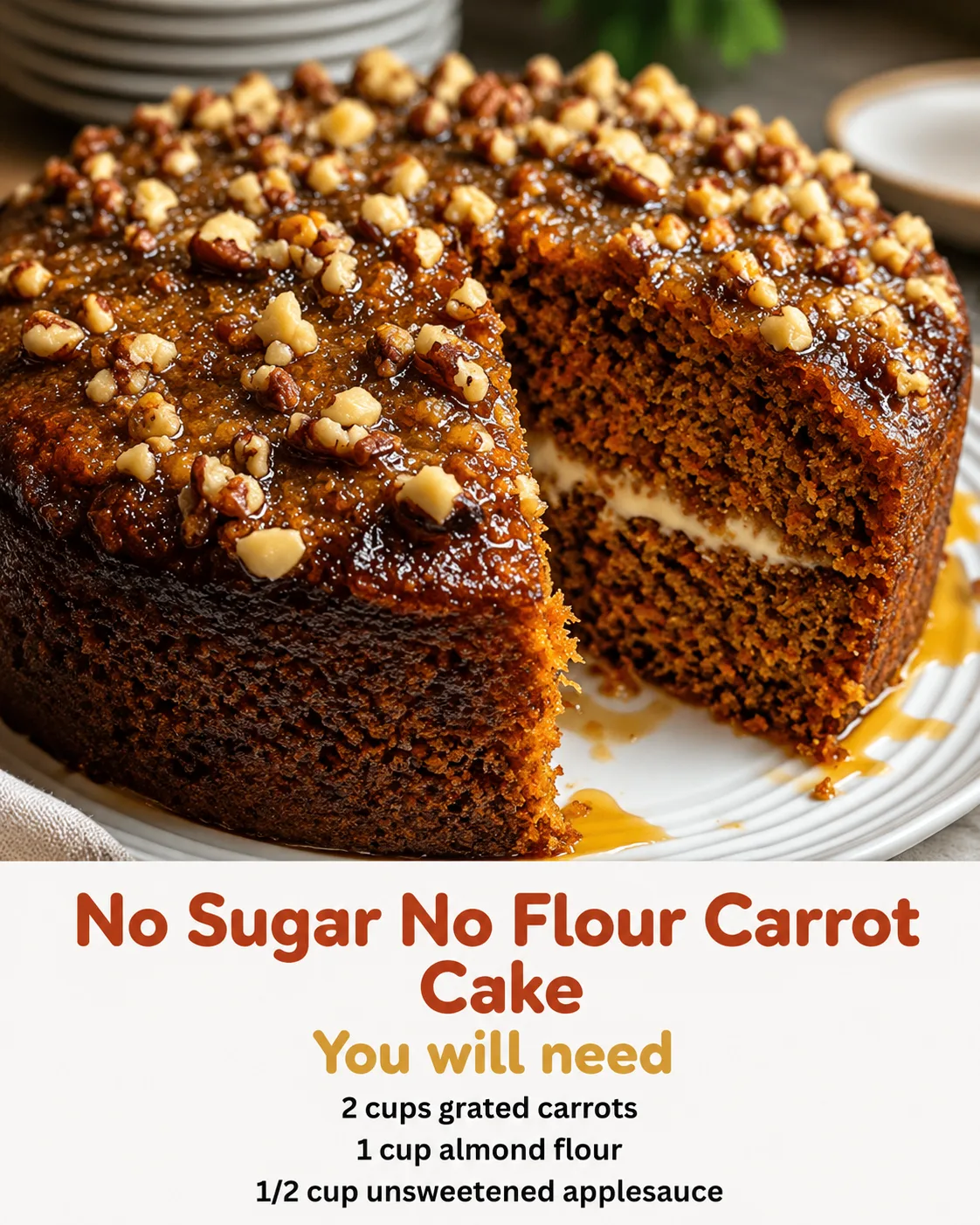
This No Sugar No Flour Carrot Cake is moist, warmly spiced, naturally sweet, and packed with fresh grated carrots. It has a tender, soft crumb with hints of cinnamon and vanilla, while almond flour gives the cake a rich texture without traditional wheat flour.
Made without refined sugar or regular flour, this carrot cake is a delicious option for a low-sugar, flourless dessert. It works beautifully as an afternoon treat, holiday dessert, or lighter alternative to a classic carrot cake.
Can This Recipe Support Weight Loss Goals?
This cake can fit into a balanced eating pattern when enjoyed in a moderate portion. Almond flour and eggs provide protein and fat, while carrots contribute fiber and natural sweetness. Because almond flour is calorie-dense, portion size still matters even though the recipe contains no added sugar or traditional flour.
Does This Recipe Fit a High-Protein Lifestyle?
This carrot cake provides moderate protein from eggs, almond flour, and Greek yogurt if used in the frosting. It is not specifically a high-protein dessert, but it can fit a protein-conscious lifestyle when paired with Greek yogurt or another protein-rich food. Its carbohydrates mainly come from carrots and the natural ingredients used.
Why This Recipe Is Special
- No added sugar: Uses a zero-sugar sweetener instead of conventional sugar.
- No regular flour: Almond flour creates a moist, tender crumb.
- Naturally carrot-rich: Fresh carrots add sweetness, color, and texture.
- Warmly spiced: Cinnamon and optional nutmeg create classic carrot-cake flavor.
- Diabetes-conscious: Lower in added sugar than traditional carrot cake, while still containing natural carbohydrates.
My Personal Experience
- The carrots keep the cake beautifully moist.
Freshly grated carrots add moisture throughout the crumb without making it heavy. - The cinnamon makes the kitchen smell amazing.
Warm spices give the cake that familiar homemade carrot-cake character. - Almond flour creates a soft texture.
It gives the cake a tender crumb while keeping it completely free of wheat flour. - The sweetness is pleasantly balanced.
A zero-sugar sweetener lets the carrots and spices remain the stars of the recipe. - It tastes even better chilled.
After resting, the flavors settle and the cake becomes easier to slice cleanly.
Perfect For
This carrot cake is ideal for diabetes-conscious dessert menus, afternoon snacks, family gatherings, holiday tables, Easter celebrations, birthday desserts, tea-time treats, low-sugar meal plans, and make-ahead desserts.
Why You’ll Love This Recipe
- No refined sugar
A suitable zero-sugar sweetener replaces traditional granulated sugar. - No wheat flour
Almond flour provides structure while keeping the cake flourless. - Moist and tender
Fresh carrots and eggs create a soft, satisfying crumb. - Classic carrot-cake flavor
Cinnamon, vanilla, and optional nutmeg provide plenty of warmth. - Easy to prepare
The batter comes together with basic kitchen ingredients. - Perfect with creamy topping
A light Greek-yogurt cream cheese topping adds tangy richness.
Common Mistakes to Avoid
- Adding too much carrot: Excess moisture can make the center dense or gummy. Measure the grated carrots accurately.
- Using coarse carrot shreds: Very large pieces can create uneven texture. Finely grate the carrots.
- Overmixing the batter: Mix only until the ingredients are combined for a tender crumb.
- Overbaking: Almond flour cakes can dry out around the edges if left in the oven too long.
- Cutting immediately: Allow the cake to cool completely so it can firm up before slicing.
Required Equipment
- 8-inch round cake pan — creates an evenly sized cake with good thickness.
- Parchment paper — makes removing the cake easier.
- Large mixing bowl — provides enough space for combining the batter.
- Fine grater — creates evenly sized carrot shreds.
- Whisk — blends the wet ingredients smoothly.
- Rubber spatula — gently folds the dry ingredients into the batter.
Recipe Details
Preparation Time: 15 minutes
Cooking Time: 30–35 minutes
Total Time: 50 minutes
Servings: 10
Best Season for This Recipe: All-season
Total Calories (Per Serving): Approximately 190 calories
Short 3-Line Description
This No Sugar No Flour Carrot Cake is moist, warmly spiced, and naturally sweetened without traditional sugar.
Almond flour and fresh carrots create a tender, flavorful crumb without wheat flour.
A simple low-sugar carrot cake that’s perfect for a diabetes-conscious dessert menu.
📝 Ingredients
For the Cake
- 2 cups (200 g) finely grated carrots
- 1½ cups (168 g) almond flour
- 3 large eggs
- ⅓ cup (65 g) granulated monk-fruit/erythritol sweetener
- ¼ cup (60 ml) unsweetened almond milk
- 2 tablespoons melted unsalted butter or coconut oil
- 1 teaspoon vanilla extract
- 1½ teaspoons ground cinnamon
- ½ teaspoon baking powder
- ¼ teaspoon baking soda
- ¼ teaspoon salt
- ¼ teaspoon ground nutmeg, optional
Optional Topping
- ½ cup (120 g) plain Greek yogurt
- 2 oz (56 g) softened reduced-fat cream cheese
- 1–2 tablespoons powdered monk-fruit/erythritol sweetener
- ½ teaspoon vanilla extract
Ingredient Notes
Use finely grated fresh carrots rather than pre-shredded carrots, which tend to be drier and thicker.
Choose a granulated sweetener designed for baking. If your sweetener has a different sweetness ratio from sugar, adjust the quantity according to its package directions.
For a nut-free version, almond flour cannot simply be replaced with the same amount of regular flour without changing the recipe’s proportions and texture.
Directions
- Preheat the oven.
Heat the oven to 350°F (175°C). Line the bottom of an 8-inch round cake pan with parchment paper and lightly grease the sides. - Prepare the carrots.
Finely grate the carrots. If they are extremely wet, gently blot them with a clean paper towel, but do not squeeze them completely dry. - Mix the wet ingredients.
In a large bowl, whisk eggs, almond milk, melted butter, vanilla, and sweetener for approximately 1 minute, until well combined. - Add the carrots.
Stir the grated carrots into the wet mixture until evenly distributed. - Combine the dry ingredients.
In a separate bowl, whisk almond flour, cinnamon, baking powder, baking soda, salt, and optional nutmeg. - Combine the batter.
Gradually add the dry ingredients to the wet mixture. Fold gently with a spatula until no dry streaks remain. Do not overmix. - Check the texture.
The batter should be thick and moist but spreadable. It should not look watery. - Transfer to the pan.
Spread the batter evenly into the prepared cake pan and smooth the surface. - Bake.
Place in the center of the oven and bake at 350°F (175°C) for 30–35 minutes. - Check for doneness.
The cake should look lightly golden and feel firm in the center. Insert a toothpick into the middle; it should come out mostly clean with a few moist crumbs. - Cool.
Allow the cake to cool in the pan for 10–15 minutes, then transfer it to a wire rack. - Cool completely.
Let the cake cool for at least 30 minutes before adding the topping. - Prepare the topping.
Beat Greek yogurt, cream cheese, powdered sweetener, and vanilla until smooth and creamy. - Frost the cake.
Spread the topping evenly over the completely cooled cake. - Chill.
Refrigerate for 30–60 minutes before slicing for the cleanest texture. - Serve.
Cut into 10 portions and serve chilled or slightly cool.
High-Protein Cooking Tip
For a more protein-friendly version, use a thick high-protein Greek yogurt in the topping and serve the cake alongside additional plain Greek yogurt. This increases protein without adding conventional sugar.
Nutrition Facts (Per Serving – Approximate)
Estimated for 1 of 10 servings, including the optional Greek-yogurt cream cheese topping. Values vary according to the almond flour, sweetener, yogurt, and cream cheese brands used.
- Calories: ~190 kcal
- Fats: ~14 g
- Cholesterol: ~65 mg
- Sodium: ~150 mg
- Potassium: ~170 mg
- Total Carbohydrates: ~9 g
- Fiber: ~3 g
- Net Carbs: ~6 g
- Sugars: ~3 g
- Protein: ~7 g
- Calcium: ~75 mg
Notes
- For lower carbohydrates: Use mostly carrots as listed and avoid adding raisins or dates.
- For extra spice: Add a pinch of ginger, allspice, or additional cinnamon.
- For crunch: Add a small amount of chopped walnuts or pecans if they fit your dietary plan.
- For more protein: Use high-protein Greek yogurt in the topping.
- For a dairy-free cake: Use coconut oil instead of butter and omit the dairy topping or use suitable dairy-free alternatives.
- Allergy note: Contains eggs and almonds; the optional topping contains dairy.
- No-sugar note: This recipe contains no conventional added sugar when made with the listed zero-sugar sweetener, but carrots and dairy naturally contain carbohydrates.
- Storage: Refrigerate the frosted cake in an airtight container for up to 4 days.
- Freezing: Freeze unfrosted cake slices individually for up to 2 months. Thaw overnight in the refrigerator.
- Reheating: No reheating is necessary. Allow refrigerated cake to sit at room temperature for approximately 10 minutes before serving.
- Flavor boost: Add a little orange zest or extra cinnamon for a brighter carrot-cake flavor.
- Meal-prep tip: Slice the cake before refrigerating so individual portions are ready to serve.
- Diabetes-conscious serving tip: Keep portions moderate and consider the total carbohydrates in the rest of the meal.
Frequently Asked Questions
1. Is this carrot cake really sugar-free?
It contains no conventional added sugar when prepared with a suitable zero-sugar sweetener, although carrots naturally contain some sugar.
2. Is this carrot cake flourless?
Yes, almond flour is used instead of traditional wheat flour.
3. Can I make this carrot cake without frosting?
Yes, the cake is flavorful enough to serve plain, which also lowers the calories and carbohydrates per serving.
4. Can I use coconut flour instead of almond flour?
Not as a direct 1:1 substitute because coconut flour absorbs much more liquid and would require a different recipe balance.
5. Can I add raisins?
You can, but raisins significantly increase the carbohydrate and sugar content, so they are best omitted for the lower-sugar version.
6. Is this recipe high in protein?
It provides moderate protein from eggs, almond flour, and Greek yogurt but is better described as protein-friendly rather than a high-protein cake.