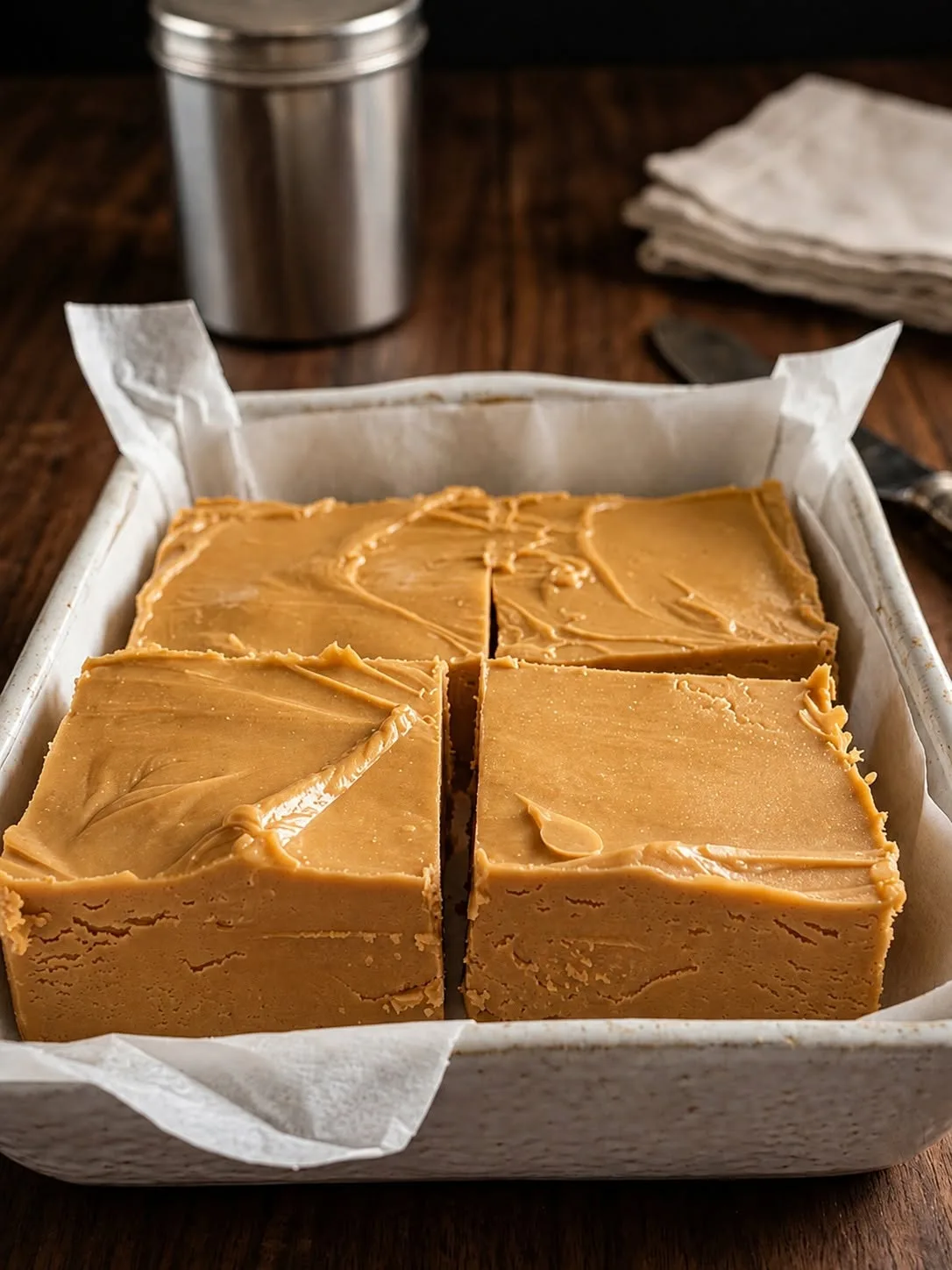
This creamy peanut butter fudge is rich, smooth, and full of classic peanut butter flavor without traditional powdered sugar. Made with unsweetened peanut butter and a powdered low-carb sweetener, it offers a delicious no-added-sugar option for dessert lovers.
This extra-large batch is perfect for holidays, parties, gifting, or keeping portions in the freezer. An optional addition of low-sugar protein powder can also make it more suitable for a protein-conscious lifestyle.
Can This Peanut Butter Fudge Support Weight Loss Goals?
This fudge can fit into a weight-conscious eating pattern when enjoyed in small portions. Peanut butter and butter are calorie-dense, so portion size remains important. Replacing traditional powdered sugar with a low-carb sweetener helps reduce carbohydrates while keeping the fudge sweet and satisfying.
Does This Recipe Fit a High-Protein Lifestyle?
Traditional peanut butter fudge is not naturally high in protein, but adding unsweetened or low-sugar protein powder can increase its protein content. Unsweetened peanut butter also contributes some protein while avoiding added sugar. Using a low-carb sweetener keeps the recipe relatively low in net carbs. For a higher-protein snack, enjoy one small fudge square alongside another protein-rich food.
Why This Recipe is Special
- No added sugar — Traditional powdered sugar is replaced with a low-carb sweetener.
- Lower-carb option — Unsweetened peanut butter helps keep carbohydrates lower.
- Large batch — Makes plenty for parties, holidays, gifting, and freezing.
- Protein-friendly — Optional protein powder can provide an additional protein boost.
- Rich and creamy — Delivers the classic peanut butter fudge experience without traditional sugar.
My Personal Experience
- The large batch makes sharing easy.
Making three double batches gives plenty of fudge for family gatherings, dessert trays, and homemade gifts. - The peanut butter flavor really stands out.
Unsweetened creamy peanut butter provides a rich, nutty flavor without needing traditional sugar. - The texture is wonderfully creamy.
Gentle heating helps keep the butter and peanut butter smoothly blended instead of separated. - Small squares make portions manageable.
Cutting the fudge into bite-size pieces makes it easy to enjoy a small treat at a time.
Perfect For
This fudge is ideal for holiday dessert trays, family gatherings, parties, homemade gifts, afternoon snacks, freezer treats, and lower-carb meal plans. It is also a convenient option when you want a no-added-sugar dessert.
Why You’ll Love This Recipe
- No traditional powdered sugar
A powdered low-carb sweetener provides sweetness while keeping added sugar out of the recipe. - Rich peanut butter flavor
Creamy peanut butter creates a satisfying, nostalgic flavor in every bite. - Easy to make in bulk
The large quantity makes it especially convenient for celebrations and gifting. - Freezer-friendly
Individual pieces can be frozen and enjoyed later whenever you want a small treat.
Common Mistakes to Avoid
- Using sweetened peanut butter — Always check the label and choose peanut butter with no added sugar.
- Using granulated sweetener — Granules can leave the finished fudge gritty.
- Cooking over high heat — Excessive heat can cause the butter and peanut butter to separate.
- Adding too much protein powder — Too much protein powder can make the fudge dry or crumbly.
Required Equipment
- Large heavy-bottomed saucepan — Provides even heat and helps prevent scorching.
- Heatproof spatula — Makes mixing and scraping the thick mixture easier.
- Three 9×13-inch pans — Provides enough space for the large batch to set evenly.
- Parchment paper — Prevents sticking and makes the fudge easy to remove.
- Sharp knife — Creates clean and uniform fudge squares.
- Measuring cups and spoons — Ensures accurate ingredient proportions.
Storage Instructions
Store the fudge in an airtight container with parchment paper between layers.
- Refrigerator: Keeps well for approximately 1–2 weeks.
- Freezer: Store in a freezer-safe airtight container for approximately 2–3 months.
- Serving: Thaw frozen pieces in the refrigerator before serving.
For easier portion control, separate the fudge into individual pieces before freezing.
Recipe Details
Preparation Time: 20 minutes
Cooking Time: 10–15 minutes
Total Time: About 35 minutes, plus 3–4 hours chilling
Servings: Approximately 96 small squares
Best Season: All-season
Calories: Approximately 110–115 calories per small square
Short Introduction
Creamy peanut butter fudge made with no added sugar and a low-carb sweetener.
Unsweetened peanut butter provides rich flavor while keeping carbohydrates lower.
Perfect for portion-controlled snacking, holidays, gifting, and freezer storage.
📝 Ingredients
For 3 Double Batches
- 6 cups unsweetened creamy peanut butter — Choose peanut butter with no added sugar.
- 3 cups unsalted butter — Creates a rich and creamy texture.
- 3 cups powdered allulose or powdered erythritol/monk-fruit sweetener — Use powdered sweetener for the smoothest result.
- 2 tablespoons pure vanilla extract
- 1 teaspoon fine salt — Reduce or omit if using salted peanut butter.
- 1½ cups unsweetened or low-sugar protein powder, optional — Vanilla or unflavored works well.
Directions
- Prepare the pans.
Line three 9×13-inch pans with parchment paper, leaving some overhang on the sides for easy removal. - Melt the butter.
Add the butter to a large heavy-bottomed saucepan. Heat over low heat for 2–3 minutes, stirring occasionally, until completely melted. - Add the peanut butter.
Stir in the peanut butter and continue heating over low heat for 3–5 minutes. Stir constantly until the mixture becomes smooth and glossy. - Add the sweetener.
Gradually add the powdered sweetener while stirring continuously. Continue over low heat for 2–3 minutes until completely incorporated. - Add vanilla and salt.
Remove the saucepan from the heat. Stir in the vanilla and salt until evenly combined. - Add protein powder if using.
Allow the mixture to cool for 2–3 minutes. Gradually add the protein powder while stirring continuously. Mix until smooth. - Transfer to the pans.
Divide the mixture evenly between the three prepared pans. Spread into an even layer using a heatproof spatula. - Chill the fudge.
Refrigerate for at least 3–4 hours, preferably overnight. The fudge should be completely firm before cutting. - Cut into squares.
Lift the fudge from each pan using the parchment paper. Cut each pan into approximately 32 small squares, yielding about 96 pieces total.
High-Protein Cooking Tips
- Choose an unsweetened or low-sugar protein powder.
- Add protein powder gradually because different powders absorb moisture differently.
- If the mixture becomes excessively thick, a small amount of additional peanut butter can help restore the creamy consistency.
- Keep portions small because higher protein does not make the fudge calorie-free.
Nutrition Facts
Per Small Square — Approximate
Estimated without optional protein powder and based on approximately 96 pieces.
- Calories: ~112
- Fat: ~10.2 g
- Cholesterol: ~15 mg
- Sodium: ~70 mg
- Potassium: ~90 mg
- Total Carbohydrates: ~3.1 g
- Fiber: ~0.8 g
- Net Carbs: ~2.3 g
- Sugars: ~1.1 g
- Protein: ~3.5 g
- Calcium: ~15 mg
Nutrition values are approximate and vary depending on the specific brands and sweeteners used.
Notes
- Storage: Refrigerate for 1–2 weeks or freeze for 2–3 months.
- Reheating: No reheating is necessary; thaw frozen pieces in the refrigerator.
- Allergy: Contains peanuts and dairy. Check protein powder labels for additional allergens.
- Sweetener: Powdered allulose generally creates a softer texture, while erythritol-based sweeteners may produce a firmer texture.
- Flavor boost: Add cinnamon or a small sprinkle of flaky sea salt before chilling.
- Chocolate variation: Add unsweetened cocoa powder or a suitable no-added-sugar chocolate ingredient.
- Peanut butter: Stir natural peanut butter thoroughly before measuring so the oils are evenly distributed.
- Diabetes-friendly consideration: Although this recipe contains no added sugar and is lower in carbohydrates, it still contains carbohydrates and calories. Individual portions should be considered as part of your overall eating plan.
Frequently Asked Questions
1. Is this peanut butter fudge diabetic-friendly?
It is designed as a no-added-sugar, lower-carb option, but individual carbohydrate needs and glucose responses vary.
2. Can I use regular powdered sugar?
Yes, but regular powdered sugar will significantly increase the carbohydrate and sugar content.
3. What peanut butter works best?
Use smooth, unsweetened peanut butter with no added sugar.
4. Which sweetener should I use?
Powdered allulose gives a softer texture, while powdered erythritol or monk-fruit blends generally produce firmer fudge.
5. Can I add protein powder?
Yes, an unsweetened or low-sugar protein powder can increase protein content, although it may slightly change the texture.
6. Can this fudge be frozen?
Yes, store individual pieces in an airtight freezer-safe container for approximately 2–3 months.