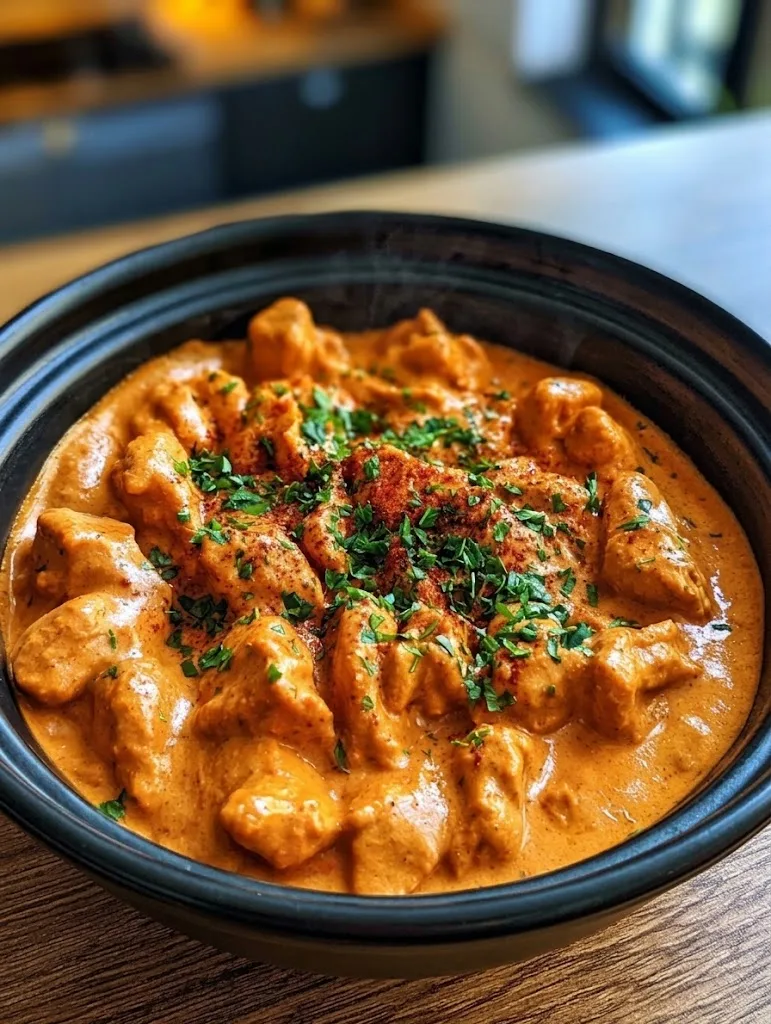
Butter Chicken is a rich and comforting Indian-inspired dish featuring tender chicken simmered in a velvety tomato-based sauce with butter, cream, garlic, ginger, and warm spices. The chicken stays juicy while the sauce develops a smooth, mildly smoky, buttery flavor that pairs beautifully with rice, naan, or lower-carb vegetable sides. With plenty of lean chicken and a creamy tomato sauce, this classic can easily fit into a high-protein meal plan.
Can This Butter Chicken Support Weight Loss Goals?
Butter Chicken can fit into a balanced weight-conscious eating pattern when portion sizes and accompaniments are considered. Chicken provides substantial protein, while tomatoes contribute flavor and nutrients without adding many calories. Because butter and cream are calorie-dense, using measured portions and pairing the curry with vegetables or a moderate serving of rice can create a more balanced meal.
Does Butter Chicken Fit a High-Protein Lifestyle?
Butter Chicken is naturally well suited to a high-protein lifestyle because chicken breast provides a substantial amount of complete protein per serving. The tomato-based sauce adds flavor without relying heavily on carbohydrates, while Greek yogurt in the marinade can contribute additional protein. The main carbohydrate increase usually comes from rice, naan, or other sides rather than the curry itself. For a higher-protein, lower-carb plate, serve it with cauliflower rice or roasted vegetables.
Why This Recipe is Special
- Rich and creamy: Butter and cream create a luxurious sauce without overwhelming the spices.
- Protein-packed: Tender chicken breast makes this a satisfying main dish.
- Deeply flavorful: Garlic, ginger, garam masala, cumin, and paprika build layers of warm spice.
- Lower-carb adaptable: The curry itself is relatively low in carbohydrates and can be paired with vegetables.
- Restaurant-style comfort: A short finishing step with butter and cream gives the sauce a silky texture.
My Personal Experience
- The sauce is the real star: The combination of tomato, butter, cream, and spices creates an incredibly smooth sauce that coats every piece of chicken.
- Marinating the chicken makes a difference: The yogurt-based marinade helps keep the chicken tender while allowing the spices to penetrate.
- The finishing butter adds something special: A small amount stirred in at the end gives the curry that glossy restaurant-style finish.
- It tastes even better the next day: The spices have more time to blend, making leftovers especially flavorful.
Perfect For
Butter Chicken is perfect for weeknight dinners, family meals, dinner parties, meal prep, Indian-inspired gatherings, cozy winter dinners, weekend cooking, and high-protein meal plans. Serve it with basmati rice and naan for a traditional meal, or pair it with cauliflower rice and vegetables for a lower-carb option.
Why You’ll Love This Recipe
- Tender, juicy chicken: Marinating before cooking helps prevent dry chicken.
- Creamy tomato sauce: The sauce is smooth, rich, and packed with warm spices.
- Easy to customize: Adjust the chili level, cream, and butter to suit your preference.
- High-protein friendly: A generous portion of chicken provides plenty of protein.
- Meal-prep friendly: The curry reheats beautifully and often tastes even better the next day.
Common Mistakes to Avoid
- Skipping the marinade: Unmarinated chicken can lack flavor and tenderness.
- Burning the spices: Cook spices over medium heat and stir frequently to prevent bitterness.
- Adding cream to a very hot sauce: Reduce the heat before adding cream to help prevent splitting.
- Overcooking the chicken: Simmer only until the chicken is cooked through and tender.
Required Equipment
- Large skillet or Dutch oven — provides enough surface area for browning the chicken and cooking the sauce.
- Mixing bowl — makes marinating the chicken simple and mess-free.
- Wooden spoon — helps scrape flavorful browned bits from the pan.
- Sharp knife — makes it easy to cut the chicken into uniform pieces.
- Measuring spoons — keeps the spice balance consistent.
Storage Instructions
Allow the curry to cool slightly before transferring it to an airtight container.
- Refrigerator: Store for up to 3–4 days.
- Freezer: Freeze for up to 2–3 months in freezer-safe containers.
- Best container: Use individual airtight containers for convenient meal-prep portions.
- Reheating: Warm gently in a skillet over low-medium heat, stirring occasionally; add a splash of water or cream if the sauce becomes too thick.
If frozen, thaw overnight in the refrigerator before reheating.
Recipe Details
Preparation Time: 20 minutes
Marinating Time: 30 minutes
Cooking Time: 30 minutes
Total Time: 1 hour 20 minutes
Servings: 6
Best Season for This Recipe: All-season
Total Calories (Per Serving): Approximately 410 calories
Short Description
Tender spiced chicken simmered in a creamy tomato, butter, garlic, and ginger sauce.
Rich, comforting, flavorful, and packed with protein in every serving.
Serve with rice, naan, cauliflower rice, or roasted vegetables.
📝 Ingredients
For the Chicken Marinade
- 2 pounds boneless, skinless chicken breasts, cut into 1-inch pieces
- 1/2 cup plain Greek yogurt
- 1 tablespoon fresh lemon juice
- 1 tablespoon minced garlic
- 1 tablespoon grated fresh ginger
- 1 teaspoon garam masala
- 1 teaspoon ground cumin
- 1 teaspoon paprika
- 1/2 teaspoon turmeric
- 1/2 teaspoon salt
- 1/4 teaspoon black pepper
Ingredient note: Greek yogurt adds tenderness and a little extra protein to the marinade.
For the Butter Chicken Sauce
- 2 tablespoons unsalted butter
- 1 tablespoon olive oil
- 1 medium yellow onion, finely diced
- 3 cloves garlic, minced
- 1 tablespoon grated fresh ginger
- 1 teaspoon garam masala
- 1 teaspoon ground cumin
- 1 teaspoon paprika
- 1/2 teaspoon turmeric
- 1/4 teaspoon cayenne pepper, optional
- 1 can (14 ounces) crushed tomatoes
- 1/2 cup heavy cream
- 1/2 cup low-sodium chicken broth
- 1 tablespoon tomato paste
- 1 teaspoon salt, or to taste
- 1/2 teaspoon black pepper
- 1 tablespoon fresh cilantro, chopped
- 1 tablespoon butter, for finishing
Optional Garnish
- Fresh cilantro
- A small drizzle of heavy cream
- Pinch of garam masala
- Lemon wedges
Directions
1. Marinate the Chicken
Add the chicken pieces to a large bowl.
Mix in the Greek yogurt, lemon juice, garlic, ginger, garam masala, cumin, paprika, turmeric, salt, and black pepper.
Coat the chicken thoroughly.
Cover and refrigerate for at least 30 minutes.
For deeper flavor, marinate for up to 8 hours.
High-protein tip: Greek yogurt provides extra protein while helping tenderize the chicken.
2. Sear the Chicken
Heat a large skillet or Dutch oven over medium-high heat.
Add the olive oil.
Add the marinated chicken in a single layer, working in batches if necessary.
Cook for approximately 3–4 minutes per side, until browned on the outside but not necessarily fully cooked inside.
Transfer the chicken to a plate.
Tip: Avoid overcrowding the pan because the chicken will steam instead of developing flavorful browning.
3. Cook the Aromatics
Reduce the heat to medium.
Add 2 tablespoons butter to the same pan.
Add the diced onion and cook for approximately 5–7 minutes, stirring occasionally, until soft and lightly golden.
Add the garlic and ginger.
Cook for another 30–60 seconds until fragrant.
4. Toast the Spices
Add the garam masala, cumin, paprika, turmeric, and optional cayenne pepper.
Stir constantly for approximately 30 seconds.
The spices should become fragrant but should not burn.
5. Build the Tomato Sauce
Add the tomato paste and stir for about 1 minute.
Pour in the crushed tomatoes and chicken broth.
Scrape the bottom of the pan to release the flavorful browned bits.
Bring the sauce to a gentle simmer.
Cook uncovered over medium-low heat for 8–10 minutes, stirring occasionally.
The sauce should become slightly thicker and darker.
6. Blend for a Smooth Sauce
For an especially restaurant-style texture, use an immersion blender to carefully blend the sauce until smooth.
If using a standard blender, cool the sauce slightly and blend in batches, taking care with the hot liquid.
Return the smooth sauce to the skillet.
7. Add the Chicken
Return the browned chicken and any accumulated juices to the sauce.
Reduce the heat to low.
Simmer for approximately 8–10 minutes, stirring occasionally, until the chicken is fully cooked and tender.
The sauce should coat the chicken rather than look watery.
8. Add the Cream
Reduce the heat to low.
Slowly stir in the heavy cream.
Allow the curry to gently simmer for 2–3 minutes.
Avoid vigorous boiling after adding the cream.
High-protein tip: Keep the chicken-to-sauce ratio generous if you’re serving this as part of a protein-focused meal.
9. Finish with Butter
Turn off the heat.
Stir in the remaining 1 tablespoon butter.
Taste and adjust the salt, black pepper, or garam masala as needed.
The sauce should be creamy, smooth, and rich with balanced tomato and spice flavor.
10. Garnish and Serve
Sprinkle fresh cilantro over the top.
Add a very small drizzle of cream and a pinch of garam masala if desired.
Serve hot with basmati rice, naan, cauliflower rice, or roasted vegetables.
For a lower-carb meal, choose cauliflower rice or steamed vegetables instead of traditional rice and naan.
Nutrition Facts (Per Serving – Approximate)
- Calories: 410 kcal
- Fats: 21 g
- Cholesterol: 145 mg
- Sodium: 620 mg
- Potassium: 850 mg
- Total Carbohydrates: 12 g
- Fiber: 2 g
- Net Carbs: 10 g
- Sugars: 6 g
- Protein: 46 g
- Calcium: 105 mg
Nutrition values are approximate and do not include rice, naan, or other serving accompaniments.
Notes
- For a lower-carb serving, pair with cauliflower rice, broccoli, or roasted vegetables.
- For extra heat, increase the cayenne or add finely chopped green chili.
- For deeper flavor, marinate the chicken overnight.
- Use boneless chicken thighs if you prefer darker, juicier meat.
- For a lighter sauce, replace part of the heavy cream with additional Greek yogurt, adding it over low heat to avoid curdling.
- For a dairy-free version, use dairy-free yogurt, plant-based butter, and unsweetened coconut cream.
- Garnish with fresh cilantro and a squeeze of lemon immediately before serving for brightness.
- The curry thickens as it cools, so add a small splash of broth when reheating if needed.
Frequently Asked Questions
Can I use chicken thighs instead of chicken breast?
Yes, boneless skinless chicken thighs work beautifully and provide a richer, juicier texture.
Can I make Butter Chicken ahead of time?
Yes, the curry can be prepared up to 3–4 days ahead and gently reheated.
How can I make Butter Chicken lower in carbs?
Serve the curry with cauliflower rice or vegetables instead of naan and regular rice.
Can I make this recipe without heavy cream?
Yes, you can use additional Greek yogurt or a lighter cream alternative, although the sauce texture will change.
Why is my Butter Chicken sauce too acidic?
A small amount of butter or cream can help balance excessive tomato acidity.
How can I increase the protein even further?
Increase the chicken portion and serve the curry with a Greek-yogurt-based side instead of high-carbohydrate accompaniments.