Description
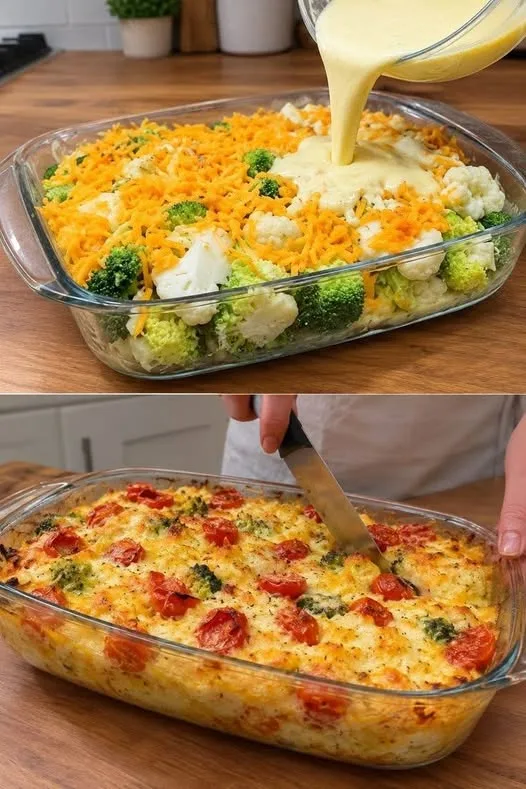
Baked Broccoli and Cauliflower Casserole is a comforting, cheesy vegetable dish featuring tender broccoli florets and cauliflower coated in a creamy, savory cheese sauce. Baked until bubbling and golden on top, this casserole delivers a delicious combination of soft vegetables, rich flavor, and a lightly crisp cheese topping. It is an easy low-carb side dish that pairs beautifully with chicken, fish, or other protein-rich mains. With a few simple ingredients and plenty of vegetables, it makes a satisfying addition to weeknight dinners and family gatherings.
Can This Recipe Support Weight Loss Goals?
This casserole can fit into a balanced weight-management plan because broccoli and cauliflower provide fiber and volume, helping make meals more satisfying. Cheese and Greek yogurt add protein, while also contributing fat and calories. Using measured portions of cheese and choosing plain Greek yogurt instead of heavy cream can help balance the recipe. Pairing it with a lean protein source can create a filling meal without relying on large portions of starch.
Does This Recipe Fit a High-Protein Lifestyle?
Baked Broccoli and Cauliflower Casserole provides some protein from cheese, Greek yogurt, and milk, while broccoli and cauliflower contribute fiber and essential nutrients. It is naturally lower in carbohydrates than many potato or pasta casseroles. Depending on the ingredients and serving size, it may provide around 9–12 grams of net carbs per serving. Its protein content is moderate rather than exceptionally high, so serving it with chicken, fish, tofu, or another protein-rich main can make the overall meal more protein-focused.
Why This Recipe Is Special
- Low-carb friendly: Broccoli and cauliflower replace higher-carbohydrate casserole staples.
- Creamy and cheesy: A smooth cheese mixture gives the vegetables a comforting texture.
- Vegetable-packed: Two nutritious vegetables combine in one easy dish.
- Family-friendly: The mild, savory flavor makes vegetables more appealing.
- Easy to customize: Add herbs, spices, or extra protein to suit your preferences.
My Personal Experience
- The cheesy topping adds delicious flavor. As the casserole bakes, the cheese melts into the vegetables and develops golden edges.
- The vegetables provide a satisfying texture. Lightly steaming them first helps keep the casserole tender without becoming watery.
- The recipe is easy to adapt. Garlic, black pepper, and paprika add extra flavor without requiring a complicated sauce.
- It works well as a make-ahead side dish. Preparing the vegetables and sauce ahead of time can make dinner preparation easier.
These points describe the expected cooking results rather than claiming personal preparation or tasting.
Perfect For
- Weeknight family dinners
- Holiday meals and potlucks
- Low-carb and keto-style menus
- Vegetable side dishes
- Meal prep for busy weeks
- Pairing with roasted chicken, fish, or tofu
Why You’ll Love This Recipe
- Simple ingredients: Fresh or frozen vegetables, cheese, and a creamy base create a comforting casserole.
- Golden, bubbling finish: Baking gives the cheese topping an appetizing color and texture.
- Easy to prepare: Most of the work involves cutting vegetables, mixing the sauce, and assembling the dish.
- Flexible for different diets: You can adjust the cheese, milk, or yogurt to fit your preferences.
- Great for leftovers: The casserole reheats well and can accompany several different meals.
Common Mistakes to Avoid
- Overcooking the vegetables before baking: Steam them only until slightly tender so they do not turn mushy in the oven.
- Leaving excess water on the vegetables: Drain thoroughly after steaming to prevent a watery casserole.
- Using too much sauce: Excess liquid can make the finished dish runny instead of creamy.
- Baking at too high a temperature: Moderate oven heat helps the cheese melt and brown without burning before the vegetables are hot.
Required Equipment
- Sharp knife — Makes it easier to cut broccoli and cauliflower into even florets.
- Cutting board — Provides a stable surface for vegetable preparation.
- Steamer basket or saucepan — Softens the vegetables before baking.
- Mixing bowl — Helps combine the creamy cheese sauce evenly.
- Baking dish — Holds the vegetables and sauce in an even layer.
- Oven mitts — Help you handle the hot baking dish safely.
Storage Instructions
Refrigerator: Let leftovers cool slightly, then transfer them to an airtight container and refrigerate within two hours. Store at 40°F (4°C) or below and enjoy within 3–4 days.
Freezer: Freeze fully cooled portions in freezer-safe containers for up to 2 months for best quality. The vegetables may soften slightly after thawing because they release moisture.
Reheating: Reheat in an oven at 350°F (175°C) until hot throughout, usually 15–20 minutes for a portion, or microwave in short intervals. Reheat leftovers to 165°F (74°C).
High-protein tip: Store individual portions alongside planned protein-rich mains so you can assemble balanced meals quickly.
Recipe Details
- Preparation Time: 15 minutes
- Cooking Time: 30 minutes
- Total Time: 45 minutes
- Servings: 6
- Best Season: All-season
- Calories: Approximately 190 calories per serving
Calories are approximate and depend on the cheese, yogurt, and milk used.
Short 3-Line Description
Baked Broccoli and Cauliflower Casserole combines tender vegetables with a creamy, cheesy sauce and a golden baked topping. This comforting, low-carb side dish is simple to prepare and perfect for family dinners. Serve it alongside chicken, fish, or tofu for a more protein-rich meal.
📝 Ingredients
Makes 6 servings.
- 3 cups broccoli florets
- 3 cups cauliflower florets
- 1 cup shredded cheddar cheese
- ½ cup plain Greek yogurt
- ¼ cup milk
- 2 tablespoons grated Parmesan cheese
- 2 cloves garlic, minced
- ½ teaspoon paprika
- ½ teaspoon black pepper
- ¼ teaspoon salt, or to taste
- 1 teaspoon olive oil or nonstick cooking spray
Ingredient notes:
- Fresh or frozen broccoli and cauliflower can be used; thaw and drain frozen vegetables thoroughly.
- Plain Greek yogurt creates a creamy sauce and adds protein.
- Freshly shredded cheddar often melts more smoothly than pre-shredded cheese.
Directions
1. Preheat the oven — 5 minutes. Set the oven to 375°F (190°C). Lightly grease a medium baking dish with olive oil or nonstick cooking spray.
2. Prepare the vegetables — 5 minutes. Cut the broccoli and cauliflower into bite-sized florets of similar size. This helps them cook evenly.
3. Steam the vegetables — 4–5 minutes. Steam until just slightly tender but still firm. They should remain bright in color and hold their shape. Drain well and pat dry to remove excess moisture.
4. Make the cheese sauce — 3 minutes. In a mixing bowl, combine the Greek yogurt, milk, minced garlic, paprika, black pepper, and salt. Stir in about three-quarters of the cheddar until evenly mixed.
5. Assemble the casserole — 3 minutes. Arrange the broccoli and cauliflower in the baking dish. Pour the sauce over the vegetables and gently toss or spread it so the florets are coated.
6. Add the topping — 1 minute. Sprinkle the remaining cheddar and Parmesan evenly over the top. This creates a flavorful, golden crust as the casserole bakes.
7. Bake — 20–25 minutes. Place the dish on the middle oven rack. Bake until the sauce is bubbling, the cheese is melted, and the top is lightly golden.
8. Rest and serve — 5 minutes. Let the casserole rest briefly before serving. The sauce will settle slightly, making it easier to spoon onto plates.
High-protein cooking tip: Use Greek yogurt rather than heavy cream for a protein boost, and serve the casserole with grilled chicken, fish, or baked tofu if you want a higher-protein meal.
Nutrition Facts (Per Serving – Approximate)
Estimated for six servings using the ingredients listed above.
| Nutrient | Approximate amount |
|---|---|
| Calories | 190 kcal |
| Total Fat | 12 g |
| Saturated Fat | 6 g |
| Cholesterol | 30 mg |
| Sodium | 300 mg |
| Potassium | 420 mg |
| Total Carbohydrates | 13 g |
| Fiber | 4 g |
| Net Carbs | 9 g |
| Sugars | 4 g |
| Protein | 11 g |
| Calcium | 200 mg |
Values are estimates and can vary with the type of cheese, yogurt, milk, and vegetable quantities used.
Notes
- Storage: Keep leftovers refrigerated in a sealed container and use within 3–4 days.
- Reheating: Warm in the oven for a better cheese topping or use the microwave for a quick serving.
- Allergy notes: Contains dairy. For a dairy-free version, use suitable plant-based yogurt, milk, and cheese alternatives; protein and texture will differ.
- Flavor boosts: Add chopped chives, thyme, chili flakes, or a pinch of nutmeg.
- Extra protein: Stir in cooked chicken pieces or serve alongside a protein-rich main.
- Crispier topping: Broil for 1–2 minutes at the end, watching closely to prevent burning.
Frequently Asked Questions
1. Is broccoli and cauliflower casserole low-carb?
Yes, it is generally lower in carbohydrates than potato or pasta casseroles, although the exact amount depends on the ingredients and serving size.
2. Can I use frozen broccoli and cauliflower?
Yes, thaw them first and drain thoroughly to prevent excess moisture in the casserole.
3. Can I make this casserole ahead of time?
Yes, assemble it ahead and refrigerate covered, then bake when needed, allowing a little extra time if it is cold.
4. Is this casserole high in protein?
It provides moderate protein from cheese and Greek yogurt, but adding chicken, fish, or tofu will make the overall meal higher in protein.
5. Can I make it without Greek yogurt?
Yes, you can use a suitable alternative such as sour cream, although the protein and nutrition values will change.
6. How do I keep the casserole from becoming watery?
Steam the vegetables until just tender, drain them thoroughly, and avoid adding more milk than the sauce needs.