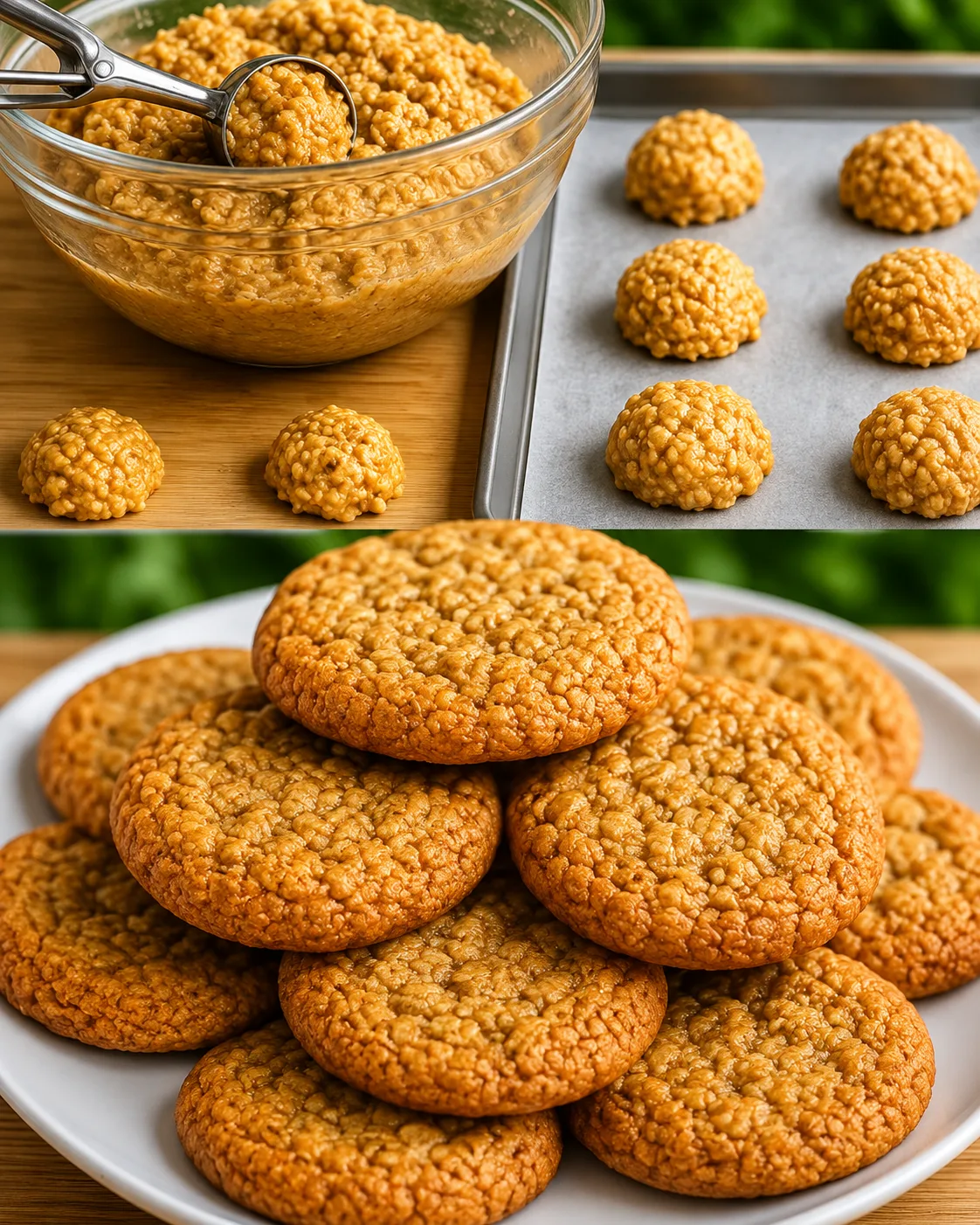
These Diabetic-Friendly Golden Cookies are buttery, lightly crisp around the edges, and tender in the center with a warm golden color. A touch of vanilla and almond gives them a delicate bakery-style flavor, while a suitable sugar substitute provides sweetness without relying on regular granulated sugar.
They are simple enough for everyday baking yet pretty enough for a tea party or holiday cookie tray. With a modest portion size and no regular added sugar, these golden cookies make a lovely option for anyone looking for a lower-sugar dessert without giving up the comforting taste of homemade cookies.
Can These Diabetic-Friendly Golden Cookies Support Weight Loss Goals?
These cookies can fit into a balanced eating pattern when enjoyed in a moderate portion. Using a sugar substitute reduces regular added sugar, but butter and flour still provide calories and carbohydrates. Keeping portions modest and pairing treats with an overall balanced eating pattern is more important than simply labeling a food as “diabetic-friendly.”
Do These Golden Cookies Fit a High-Protein Lifestyle?
These cookies provide a small amount of protein from eggs and almond flour but are not a high-protein food. Almond flour contributes more protein and fiber than traditional refined flour, while the egg helps provide structure. For a more protein-focused snack, enjoy one cookie alongside plain Greek yogurt or another protein-rich food.
Why This Recipe Is Special
- No regular added sugar: Uses a suitable baking sweetener instead of conventional granulated sugar.
- Golden and buttery: Butter creates a rich flavor and delicate texture.
- Lower-carb option: Almond flour replaces part of the traditional wheat flour.
- Quick to prepare: The dough requires simple mixing and shaping.
- Perfectly portionable: Small cookies make it easier to enjoy a controlled serving.
My Personal Experience
- The edges become beautifully golden.
They develop a delicate crispness while the center remains tender and buttery. - The almond flavor adds something special.
A small amount of almond extract gives these simple cookies a bakery-style aroma. - They are not overly sweet.
The balanced sweetness lets the butter and vanilla flavors remain noticeable. - They pair beautifully with tea or coffee.
One small cookie makes a satisfying accompaniment to an unsweetened hot drink. - They are easy to keep portioned.
Baking smaller cookies makes it simple to store individual servings for occasional treats.
Perfect For
These golden cookies are perfect for afternoon tea, coffee breaks, holiday cookie trays, family gatherings, birthdays, lunchbox treats, dessert tables, weekend baking, and diabetes-conscious menus. They also work well as a small make-ahead treat because they store easily.
Why You’ll Love This Recipe
- Buttery golden flavor
Butter and vanilla give the cookies a classic homemade taste. - Reduced added sugar
A suitable sugar substitute keeps them free from regular granulated sugar. - Tender and crisp
The edges become lightly crisp while the centers stay delicate. - Easy ingredients
You don’t need unusual baking ingredients or complicated techniques. - Small-batch friendly
The recipe produces a manageable batch that can be portioned and stored. - Tea-time perfect
Their mild sweetness makes them especially good with unsweetened tea or coffee.
Common Mistakes to Avoid
- Overmixing the dough: Mix only until the ingredients come together to prevent tough cookies.
- Using melted butter: Softened butter works better for creating the intended cookie texture.
- Making the cookies too thick: Very thick cookies may remain soft in the center while the edges brown.
- Overbaking: Remove them when the edges are lightly golden; they will firm as they cool.
- Using too much almond extract: Almond extract is concentrated, so a little goes a long way.
Required Equipment
- Baking sheet — provides an even surface for consistent baking.
- Parchment paper — prevents sticking and simplifies cleanup.
- Electric mixer — creams the butter smoothly with the sweetener.
- Mixing bowls — keeps wet and dry ingredients organized.
- Cookie scoop — creates evenly sized portions.
- Wire cooling rack — allows the cookies to cool without becoming soggy underneath.
Recipe Details
Preparation Time: 15 minutes
Chilling Time: 20 minutes
Cooking Time: 10–12 minutes
Total Time: 47 minutes
Servings: 18 cookies
Best Season for This Recipe: All-season
Total Calories (Per Serving): Approximately 105 calories
Short 3-Line Description
These Diabetic-Friendly Golden Cookies are buttery, lightly crisp, and delicately sweet with hints of vanilla and almond.
Almond flour adds a tender texture while a suitable sugar substitute replaces regular granulated sugar.
A simple lower-sugar cookie recipe that’s perfect for tea time, coffee breaks, and occasional desserts.
📝 Ingredients
- ½ cup (113 g) unsalted butter, softened
- ½ cup (100 g) granulated monk-fruit/erythritol baking sweetener
- 1 large egg
- 1 teaspoon vanilla extract
- ¼ teaspoon almond extract
- 1 cup (112 g) almond flour
- ½ cup (60 g) all-purpose flour
- ½ teaspoon baking powder
- ¼ teaspoon fine sea salt
Ingredient Note
Use a granulated sweetener intended for baking. Sweetness and volume vary between products, so follow the manufacturer’s sugar-equivalent instructions when necessary.
Directions
- Prepare the oven.
Heat the oven to 350°F (175°C). Line a baking sheet with parchment paper. - Cream the butter and sweetener.
Add softened butter and granulated sweetener to a mixing bowl. Beat on medium speed for 2–3 minutes until lighter and creamy. - Add the egg and extracts.
Beat in the egg, vanilla extract, and almond extract on low speed for about 30 seconds, just until combined. - Combine the dry ingredients.
In another bowl, whisk together almond flour, all-purpose flour, baking powder, and salt. - Make the dough.
Add the dry ingredients to the butter mixture. Mix on low speed just until a soft dough forms. - Chill the dough.
Cover the bowl and refrigerate for 20 minutes. This makes the dough easier to shape and helps prevent excessive spreading. - Portion the cookies.
Scoop approximately 1 tablespoon of dough per cookie and roll gently into balls. - Arrange on the baking sheet.
Place the dough balls about 2 inches apart. - Flatten gently.
Press each cookie lightly with the bottom of a glass or your fingers until approximately ¼-inch thick. - Bake.
Bake at 350°F (175°C) for 10–12 minutes, rotating the baking sheet halfway through if your oven browns unevenly. - Watch the edges.
The cookies are ready when the edges are lightly golden and the centers still look slightly soft. - Cool on the tray.
Let the cookies rest on the baking sheet for 5 minutes. They will firm up as they cool. - Transfer to a rack.
Move the cookies to a wire rack and cool completely before storing.
Baking Tip
Do not wait for the entire cookie surface to become deeply golden. The centers should still look slightly soft when the cookies come out of the oven; they will continue setting as they cool.
Nutrition Facts (Per Serving – Approximate)
Estimated for 1 of 18 cookies using a monk-fruit/erythritol sweetener. Exact values vary according to ingredient brands and the specific sweetener used.
- Calories: ~105 kcal
- Fats: ~8 g
- Cholesterol: ~25 mg
- Sodium: ~45 mg
- Potassium: ~35 mg
- Total Carbohydrates: ~6 g
- Fiber: ~1 g
- Net Carbs: ~5 g
- Sugars: ~1 g
- Protein: ~2 g
- Calcium: ~25 mg
Notes
- For more crunch: Bake 1–2 minutes longer, watching the edges carefully.
- For softer cookies: Remove them from the oven as soon as the edges turn lightly golden.
- For extra flavor: Add ½ teaspoon lemon zest or orange zest.
- For chocolate flavor: Add a small amount of unsweetened cocoa powder while reducing the flour by the same amount.
- For nut-free baking: Replace almond flour with a suitable flour blend, but expect some texture differences.
- For gluten-free baking: Use a certified gluten-free flour blend in place of all-purpose flour.
- Sweetener note: Erythritol-based sweeteners can create a slightly cool aftertaste for some people.
- Allergy note: Contains dairy, egg, almonds, and wheat.
- Storage: Keep completely cooled cookies in an airtight container at room temperature for up to 4 days.
- Refrigeration: For longer storage, refrigerate in a sealed container for up to 1 week.
- Freezing: Freeze baked cookies in a freezer-safe container for up to 2 months.
- Reheating: Thaw at room temperature. For a freshly baked texture, warm for 2–3 minutes at 300°F (150°C).
- Portion tip: Store cookies individually or in small portions to make serving sizes easier to manage.
- Diabetes-conscious note: These cookies contain carbohydrates from wheat flour and almond flour even though they contain no regular added sugar. “Sugar-free” does not mean carbohydrate-free.
Frequently Asked Questions
1. Are these golden cookies sugar-free?
They contain no regular added sugar when prepared with the specified baking sweetener, although some ingredients naturally contain small amounts of sugar.
2. Are these cookies suitable for people with diabetes?
They are designed as a reduced-added-sugar option, but they still contain carbohydrates and should be enjoyed in an appropriate portion.
3. Can I use regular sugar?
Yes, but the cookies will no longer be sugar-free or reduced in added sugar, and the nutrition information will change.
4. Why do my cookies spread too much?
The butter may have been too warm, or the dough may not have been chilled long enough.
5. Can I make these cookies without almond flour?
Yes, but replacing almond flour will change the texture, moisture, and nutritional profile.
6. How can I make these cookies more protein-friendly?
Serve one cookie with plain Greek yogurt or another protein-rich food rather than increasing the flour or adding extra sweetener.