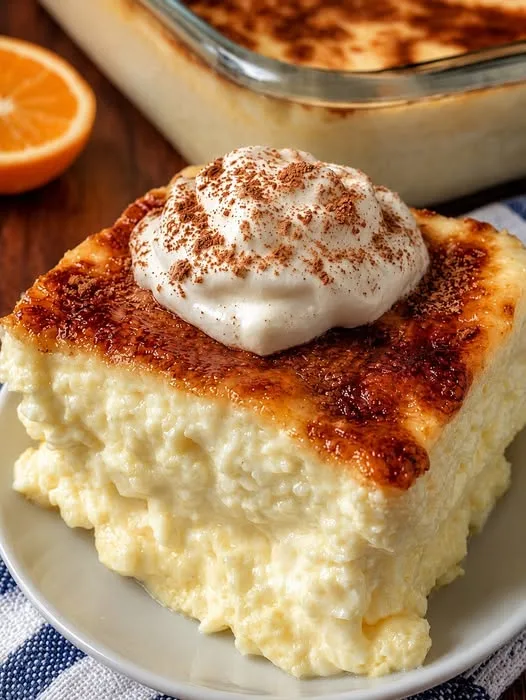
This Diabetic-Friendly Creamy Baked Milk Custard Cake is wonderfully soft, smooth, and delicate, with a gentle milky flavor and a silky custard-like center. It has the comforting texture of a baked custard combined with the lightness of a simple cake, making every bite creamy without feeling overly heavy.
Made without regular granulated sugar, this recipe uses a suitable baking sweetener to create a lightly sweet dessert while milk and eggs provide the classic custard character. A touch of vanilla and nutmeg adds warmth, making this an elegant choice for afternoon tea, family desserts, or a lighter after-dinner treat.
Can This Creamy Baked Milk Custard Cake Support Weight Loss Goals?
This dessert can fit into a balanced eating pattern when enjoyed in a moderate portion. Eggs and milk provide protein, while using a sugar substitute can reduce added sugar. However, the cake still contains calories, carbohydrates, and fat, so portion size remains important when including it in a weight-conscious eating pattern.
Does This Recipe Fit a High-Protein Lifestyle?
This custard cake provides moderate protein because it contains eggs and milk, but it is not designed as a high-protein dessert. The protein comes primarily from the eggs and dairy rather than added protein ingredients. For a more protein-focused serving, pair a small slice with plain Greek yogurt.
Why This Recipe Is Special
- Soft custard-like texture: The combination of eggs and milk creates a delicate, creamy interior.
- No regular added sugar: A suitable baking sweetener provides sweetness without conventional granulated sugar.
- Light and comforting: It has a tender texture without a heavy frosting or rich filling.
- Simple ingredients: Most ingredients are everyday kitchen staples.
- Easy portion control: The baked cake can be cut into neat individual servings.
My Personal Experience
- The texture is incredibly soft.
The milk and egg mixture creates a tender center that feels almost like baked custard. - Vanilla brings out the milky flavor.
A little vanilla makes this simple dessert taste warm and comforting without overpowering it. - The top develops a delicate golden finish.
It gives the cake a subtle contrast against the smooth, creamy interior. - It feels lighter than a traditional frosted cake.
There is no thick icing or sugary filling, so the dessert remains pleasantly delicate. - It tastes especially good chilled.
Refrigeration firms the custard texture and makes the milk flavor even more refreshing.
Perfect For
This baked milk custard cake is ideal for afternoon tea, family desserts, Sunday dinners, brunches, holiday tables, birthdays, light desserts, meal-prep portions, and diabetes-conscious menus. It can be served slightly warm, at room temperature, or chilled.
Why You’ll Love This Recipe
- Silky and creamy
The baked custard center is smooth without being overly rich. - Lightly sweet
A suitable sugar substitute provides sweetness while allowing the natural milk flavor to shine. - Easy to prepare
The batter requires simple whisking rather than complicated baking techniques. - No frosting needed
The soft custard texture makes the cake delicious on its own. - Beautifully golden
The top becomes lightly browned while the inside remains pale and creamy. - Make-ahead friendly
The texture becomes even firmer and easier to slice after chilling.
Common Mistakes to Avoid
- Overbaking the cake: Too much heat or baking time can turn the custard center rubbery or dry.
- Using boiling-hot milk: Very hot milk can partially cook the eggs and create lumps.
- Whisking too aggressively: Excessive whisking introduces air bubbles that can affect the smooth custard texture.
- Cutting immediately: The cake needs time to cool and set before slicing.
- Using a very deep pan: An overly deep cake can take longer to cook and may result in uneven texture.
Required Equipment
- 8-inch square baking dish — creates an even thickness for consistent baking.
- Mixing bowl — provides enough room for combining the custard batter.
- Whisk — blends the eggs and milk smoothly.
- Fine-mesh sieve — removes small lumps for a silky finished texture.
- Measuring cups and spoons — keeps the milk-to-egg ratio consistent.
- Cooling rack — allows the cake to cool evenly after baking.
Recipe Details
Preparation Time: 15 minutes
Cooking Time: 40–45 minutes
Cooling Time: 30 minutes
Total Time: 1 hour 30 minutes
Servings: 9
Best Season for This Recipe: All-season
Total Calories (Per Serving): Approximately 145 calories
Short 3-Line Description
This Diabetic-Friendly Creamy Baked Milk Custard Cake combines eggs, milk, and vanilla for an irresistibly soft texture.
A suitable sugar substitute keeps the recipe free of regular added sugar while preserving its delicate sweetness.
Serve it chilled or slightly warm for a comforting lower-sugar custard-style dessert.
📝 Ingredients
- 2 cups (480 ml) 2% milk
- 3 large eggs
- ½ cup (100 g) granulated monk-fruit/erythritol baking sweetener
- ½ cup (60 g) all-purpose flour
- 2 tablespoons unsalted butter, melted
- 1 teaspoon vanilla extract
- ¼ teaspoon ground nutmeg
- ¼ teaspoon fine sea salt
- ½ teaspoon baking powder
Ingredient Note
Use a granulated sweetener suitable for baking and follow the product’s conversion instructions because different sugar substitutes vary in sweetness and volume. Use milk that is warm rather than hot when combining it with the eggs.
Directions
- Preheat the oven.
Heat the oven to 350°F (175°C). Lightly grease an 8-inch square baking dish. - Warm the milk.
Heat the milk gently over low heat until it is warm but not steaming or boiling. Remove from the heat and let it cool slightly. - Prepare the eggs.
In a large mixing bowl, whisk the eggs and baking sweetener on low speed or by hand for about 1 minute until well combined. - Add the butter and vanilla.
Whisk in melted butter, vanilla, nutmeg, and salt. - Add the flour.
Sift the flour and baking powder into the egg mixture. Whisk gently until smooth. - Gradually add the milk.
Slowly pour the warm milk into the batter while whisking gently. Avoid vigorous mixing. - Strain the batter.
Pour the batter through a fine-mesh sieve into the prepared baking dish. This removes any small lumps and helps create a smoother custard texture. - Bake.
Place the dish in the center of the oven and bake at 350°F (175°C) for 40–45 minutes. - Check the center.
The edges should be set and lightly golden while the center should have a slight jiggle when the pan is gently moved. - Avoid overbaking.
The center will continue setting as the cake cools. Do not wait until the entire surface is completely firm in the oven. - Cool.
Remove from the oven and let the cake cool at room temperature for approximately 30 minutes. - Chill.
For the smoothest custard-like texture, refrigerate for at least 2 hours before slicing. - Slice and serve.
Cut into 9 portions using a sharp knife. Serve chilled or allow individual portions to sit at room temperature for a few minutes before serving.
High-Protein Cooking Tip
For a more protein-friendly dessert, serve each portion with ¼–½ cup plain Greek yogurt. The yogurt adds protein and creaminess without requiring additional sweetener.
Nutrition Facts (Per Serving – Approximate)
Estimated for 1 of 9 servings using 2% milk and a monk-fruit/erythritol baking sweetener. Actual values vary according to brands and sweetener used.
- Calories: ~145 kcal
- Fats: ~6 g
- Cholesterol: ~80 mg
- Sodium: ~120 mg
- Potassium: ~105 mg
- Total Carbohydrates: ~16 g
- Fiber: ~0.5 g
- Net Carbs: ~15.5 g
- Sugars: ~4 g
- Protein: ~6 g
- Calcium: ~105 mg
Notes
- For stronger vanilla flavor: Add another ½ teaspoon vanilla extract.
- For a warmer flavor: Add a pinch of cinnamon alongside the nutmeg.
- For a smoother texture: Always strain the batter before baking.
- For a golden top: Bake uncovered and avoid placing the dish too close to the top heating element.
- For a richer version: Use whole milk, but remember that the calorie and fat content will increase.
- For extra protein: Serve with plain Greek yogurt or use a higher-protein milk if suitable.
- For gluten-free baking: Replace all-purpose flour with a suitable 1-to-1 gluten-free baking flour.
- Allergy note: Contains milk, eggs, and wheat.
- Storage: Cover and refrigerate leftovers for up to 4 days.
- Freezing: Freezing is not recommended for the best custard texture because thawing can make the cake watery or grainy.
- Reheating: This dessert is best served chilled or at room temperature. If warming, use very gentle heat to avoid curdling the custard.
- Flavor boost: Add fresh lemon zest, orange zest, cinnamon, or a small amount of unsweetened coconut.
- Sweetener note: Erythritol-based sweeteners may produce a slightly cooling sensation for some people.
- Diabetes-conscious note: This recipe contains naturally occurring carbohydrates from milk and flour even though it contains no regular added sugar. Portion size and total carbohydrate intake still matter.
Frequently Asked Questions
1. Is this milk custard cake sugar-free?
It contains no regular added sugar when prepared with the specified sugar substitute, although milk naturally contains lactose.
2. Is this cake suitable for people with diabetes?
It is designed as a reduced-added-sugar dessert, but it still contains carbohydrates from milk and flour and should be enjoyed according to individual dietary needs.
3. Why is the center slightly jiggly after baking?
A gentle jiggle indicates the custard is still moist and will continue setting as it cools.
4. Can I use whole milk?
Yes, whole milk will make the cake richer and creamier but will increase the fat and calorie content.
5. Can I make this cake ahead of time?
Yes, it can be prepared a day ahead and kept covered in the refrigerator.
6. Can I serve it warm?
Yes, although chilling produces a firmer and smoother custard texture.