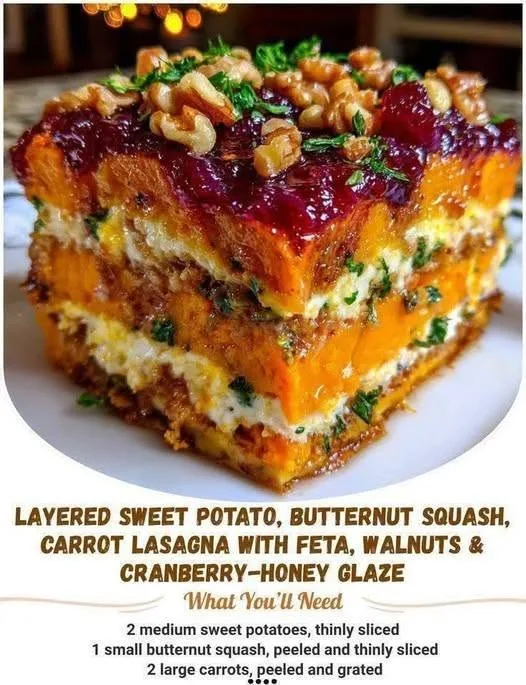
Sweet Potato Butternut Squash Carrot Lasagna is a colorful, comforting dish layered with naturally sweet roasted vegetables, creamy ricotta, savory tomato sauce, and melted mozzarella cheese. Every bite combines tender vegetable layers with rich, cheesy goodness, creating a satisfying alternative to traditional pasta lasagna. This vegetable-packed recipe is perfect for cozy family dinners, meatless Mondays, and make-ahead meals. With ricotta, mozzarella, and Parmesan providing protein, it can also fit into a high-protein vegetarian lifestyle. Although sweet potatoes, carrots, and butternut squash are nutritious, naturally carbohydrate-rich vegetables, you can adjust the portions and cheese filling to suit your dietary preferences.
Can This Sweet Potato Butternut Squash Carrot Lasagna Support Weight Loss Goals?
This vegetable lasagna can fit into a balanced weight-management plan when served in reasonable portions alongside other nutritious foods. Sweet potatoes, butternut squash, and carrots provide fiber and naturally sweet flavors, while ricotta and mozzarella contribute protein and help make each serving satisfying. Using a measured amount of cheese and a tomato sauce without added sugar can help manage the overall calorie content. For an extra protein boost, add cottage cheese to the ricotta mixture or include a layer of cooked lentils. This recipe is not inherently low-carb, but it can be enjoyed as part of a varied eating pattern without eliminating comforting foods.
Does Sweet Potato Butternut Squash Carrot Lasagna Fit a High-Protein Lifestyle?
Yes, this vegetarian lasagna can contribute protein through ricotta, mozzarella, Parmesan, and optional cottage cheese. Sweet potatoes, butternut squash, and carrots provide fiber, potassium, and natural sweetness, but they also contribute a substantial amount of carbohydrates. Depending on the portion size and cheese quantities, each serving may provide approximately 15–20 grams of protein and 25–35 grams of net carbs. For a higher-protein version, increase the ricotta or add cottage cheese and cooked lentils to the filling. This makes the dish more suitable for a protein-conscious lifestyle, although it is not naturally a strict keto or very-low-carb recipe.
Why This Recipe Is Special
- A colorful vegetable combination: Sweet potato, butternut squash, and carrots bring natural sweetness and beautiful color to every layer.
- Comforting and cheesy: Ricotta, mozzarella, and Parmesan create a creamy filling and a golden, bubbling topping.
- Vegetarian-friendly: The recipe delivers a satisfying meatless main course with plenty of flavor.
- Easy to prepare ahead: Assemble the layers in advance and bake when you are ready to serve.
- Customizable protein content: Cottage cheese or cooked lentils can boost protein without changing the dish’s comforting character.
My Personal Experience
- A comforting alternative to classic lasagna:
The tender sweet potato and squash layers create a naturally sweet, hearty base. The tomato sauce and melted cheese balance those flavors with a savory finish. - A delicious way to enjoy vegetables:
Carrots and butternut squash blend beautifully with the creamy cheese filling. Even people who prefer traditional comfort food may enjoy this colorful combination. - Perfect for make-ahead cooking:
Preparing the vegetables and cheese filling ahead makes assembly easier on busy days. Once baked, the lasagna slices neatly after a short resting period. - Easy to adapt for extra protein:
Mixing cottage cheese into the ricotta filling increases the protein content while keeping the layers creamy. Cooked lentils can also add protein and texture. - The leftovers make a satisfying lunch:
A refrigerated slice reheats well and retains its savory, cheesy flavor. Pair it with a green salad for a balanced meal.
These points describe the recipe’s expected qualities and practical preparation benefits rather than claiming personal testing.
Perfect For
- Family dinners: Serve warm slices with a crisp green salad for a comforting meal.
- Meatless Mondays: Enjoy a hearty vegetarian main dish made with vegetables and cheese.
- Meal prep: Bake ahead and portion into containers for convenient lunches and dinners.
- Autumn and winter gatherings: The roasted squash and sweet potato flavors are especially appealing during cooler months.
- Vegetarian celebrations: Serve this colorful lasagna as a centerpiece for a meat-free dinner.
- High-protein vegetarian meals: Add cottage cheese or lentils to increase protein per serving.
- Potlucks and shared meals: The layered presentation makes it easy to portion and serve to a group.
Why You’ll Love This Recipe
- Naturally sweet and savory:
Sweet potatoes, squash, and carrots provide a gentle sweetness that complements the tangy tomato sauce. Garlic, herbs, and Parmesan keep the flavor balanced. - Creamy, cheesy layers:
Ricotta gives the filling a soft, creamy texture, while mozzarella melts into a delicious topping. Parmesan adds a savory finish. - A satisfying meatless main:
The vegetable layers and cheese filling create a substantial vegetarian meal. Adding cottage cheese or lentils can make it even more protein-rich. - Great for leftovers:
The flavors meld together as the lasagna rests, making reheated portions especially enjoyable. Individual slices are easy to pack for lunch. - Flexible ingredients:
You can use thinly sliced vegetables, adjust the herbs, or choose lower-fat cheese if preferred. The recipe also works with gluten-free ingredients because it does not require traditional pasta sheets.
Common Mistakes to Avoid
- Cutting the vegetables too thick: Thick slices may remain firm while the cheese topping browns; slice them evenly, about ⅛–¼ inch thick.
- Using watery vegetables or sauce: Excess moisture can make the lasagna fall apart; roast watery vegetables lightly and use a thick tomato sauce.
- Overfilling the layers: Too much filling can make serving difficult and cause the lasagna to slide apart; spread each layer evenly.
- Cutting immediately after baking: The hot layers need time to settle; rest the lasagna for 10–15 minutes before slicing.
Required Equipment
- Sharp chef’s knife or mandoline — Produces thin, even vegetable slices for consistent cooking.
- Cutting board — Provides a stable surface for preparing the vegetables safely.
- Baking sheet — Helps roast vegetable slices and remove excess moisture before layering.
- Large mixing bowl — Makes it easy to combine ricotta, egg, herbs, and seasonings.
- 9 × 13-inch baking dish — Holds the layers evenly and provides space for the cheese topping.
- Aluminum foil — Covers the dish during the first part of baking to help the vegetables soften.
- Measuring cups and spoons — Keep the sauce, cheese, and seasonings consistent.
- Spatula or serving knife — Helps spread the filling and portion the finished lasagna neatly.
Storage Instructions
Refrigerator: Allow the lasagna to cool slightly, then transfer portions to airtight, food-safe containers and refrigerate within two hours of cooking. Store at 40°F (4°C) or below and enjoy within 3–4 days.
Freezer: Freeze individual slices in freezer-safe containers or wrap them tightly in freezer-safe material. For the best quality, use within 2–3 months. Label each container with the preparation date and thaw overnight in the refrigerator before reheating.
Reheating: Reheat individual portions in a microwave until steaming hot throughout. Alternatively, place the lasagna in an oven-safe dish, cover with foil, and heat at 350°F (175°C) for approximately 20–25 minutes, depending on portion size and whether it is chilled or thawed.
Keeping it protein-friendly: The ricotta, mozzarella, and Parmesan continue to provide protein after storage. Keep the dish properly refrigerated and avoid leaving cooked portions at room temperature for extended periods.
Recipe Details
- Preparation Time: 30 minutes
- Cooking Time: 50–60 minutes
- Total Time: Approximately 1 hour 30 minutes
- Servings: 8
- Best Season: Autumn and winter, but suitable for all seasons
- Total Calories Per Serving: Approximately 290 calories
Calories and nutrition are estimates based on the ingredients below and may vary with vegetable sizes, cheese brands, sauce, and portion size.
Short 3-Line Description
Sweet Potato Butternut Squash Carrot Lasagna layers tender vegetables with creamy ricotta, savory tomato sauce, and melted mozzarella.
This comforting vegetarian dish offers plenty of color, flavor, and customizable protein from its cheese filling.
Prepare it ahead, bake until golden and bubbling, and serve warm for a satisfying family meal.
📝 Ingredients
For the vegetable layers
- 1 medium sweet potato (approximately 250 g), peeled and thinly sliced
- 2 cups (approximately 300 g) peeled butternut squash, thinly sliced
- 2 medium carrots (approximately 150 g), peeled and thinly sliced
- 1 tablespoon (15 ml) olive oil
- ½ teaspoon salt
- ¼ teaspoon ground black pepper
- ½ teaspoon dried thyme
For the cheese filling
- 1 cup (250 g) part-skim ricotta cheese
- 1 cup (225 g) low-moisture mozzarella cheese, shredded, divided
- ¼ cup (25 g) grated Parmesan cheese
- 1 large egg
- 1 teaspoon dried Italian seasoning
- 2 cloves garlic, minced
For the tomato sauce
- 1½ cups (360 g) plain tomato passata or unsweetened tomato sauce
- 1 tablespoon tomato paste
- 1 teaspoon dried basil
- ¼ teaspoon ground black pepper
- ¼ teaspoon salt, or to taste
Optional protein boost
- ½ cup (110 g) low-fat cottage cheese, mixed into the ricotta filling
Ingredient notes:
- Choose a firm sweet potato and squash so they are easier to slice into even layers.
- Use plain tomato passata without added sugar for better control over sweetness and carbohydrates.
- Low-moisture mozzarella helps prevent a watery lasagna.
- The egg helps bind the ricotta filling; omit it if necessary, but expect a softer filling.
- Adding cottage cheese increases protein, but the nutrition estimates will change.
Directions
- Preheat the oven — 5 minutes.
Set the oven to 400°F (200°C). Lightly grease a 9 × 13-inch baking dish with a little olive oil. No stovetop cooking is required. - Prepare the vegetables — 10 minutes.
Peel the sweet potato, squash, and carrots, then slice them evenly about ⅛–¼ inch thick. Toss with olive oil, salt, pepper, and thyme. Even slices cook more consistently and make the lasagna easier to cut. - Pre-roast the vegetables — 15 minutes.
Arrange the slices in a single layer on a baking sheet. Roast at 400°F (200°C) until slightly softened but not fully cooked. The edges should be tender enough to bend slightly without falling apart. This step helps prevent excess moisture in the finished dish. - Mix the cheese filling — 5 minutes.
In a mixing bowl, combine ricotta, egg, Parmesan, half of the shredded mozzarella, garlic, and Italian seasoning. If using cottage cheese, mix it in now. Stir until creamy and evenly combined. - Prepare the sauce — 2 minutes.
In a separate bowl, mix the tomato passata, tomato paste, dried basil, black pepper, and salt. The sauce should be thick enough to coat the back of a spoon rather than watery. - Assemble the lasagna — 8 minutes.
Spread a thin layer of tomato sauce across the bottom of the baking dish. Add a layer of sweet potato, squash, and carrot slices, followed by part of the cheese filling and a little more sauce. Repeat until the ingredients are used, finishing with tomato sauce and the remaining mozzarella. - Bake covered — 25 minutes.
Cover the dish loosely with foil and bake at 375°F (190°C). The lower heat helps the vegetable layers soften without browning the cheese too quickly. - Bake uncovered — 15–20 minutes.
Remove the foil and continue baking until the cheese is melted, lightly golden, and bubbling around the edges. Insert a knife into the center; it should slide through the vegetable layers with little resistance. If the vegetables are still firm, cover and bake for another 5–10 minutes. - Rest and serve — 10–15 minutes.
Remove the lasagna from the oven and allow it to rest before slicing. This helps the cheese filling set and makes portions easier to lift from the dish. Garnish with fresh basil or parsley if desired.
High-protein tip: Use part-skim ricotta and mozzarella, or mix cottage cheese into the filling for additional protein. For an even more substantial vegetarian meal, add a thin layer of cooked lentils while assembling.
Nutrition Facts (Per Serving – Approximate)
Estimated per serving for 8 portions, using the listed ingredients and excluding the optional cottage cheese.
- Calories: 290 kcal
- Fat: 15 g
- Cholesterol: 65 mg
- Sodium: 570 mg
- Potassium: 650 mg
- Total Carbohydrates: 28 g
- Fiber: 5 g
- Net Carbs: 23 g
- Sugars: 8 g
- Protein: 15 g
- Calcium: 280 mg
These values are estimates and may vary depending on the cheese brands, vegetable weights, and tomato sauce used. Adding cottage cheese changes the nutrition values. This recipe is vegetable-rich and vegetarian-friendly, but it is not naturally low-carb because sweet potato, squash, and carrots contribute carbohydrates.
Notes
- Storage: Refrigerate leftovers within two hours and consume within 3–4 days.
- Freezing: Freeze fully cooled portions in airtight, freezer-safe containers for up to 2–3 months for the best quality.
- Reheating: Heat in the oven at 350°F (175°C) until steaming hot throughout, or use a microwave for individual servings.
- Allergy notes: Contains dairy and egg. Check packaged tomato sauce and cheese labels for additional ingredients or cross-contact warnings.
- Flavor boosts: Add fresh basil, oregano, chili flakes, or a small amount of smoked paprika for extra depth.
- Texture tip: Pre-roasting the vegetables and using a thick sauce help prevent excess liquid from collecting at the bottom.
- Higher-protein variation: Add cottage cheese to the ricotta or include cooked lentils between the vegetable layers.
- Lower-carbohydrate variation: Reduce the amount of sweet potato and replace some of it with thinly sliced zucchini or eggplant, noting that this will change the nutrition values.
Frequently Asked Questions
1. Can I make sweet potato butternut squash carrot lasagna ahead of time?
Yes, assemble the layers up to one day ahead, cover, refrigerate, and bake when needed, allowing extra time if the dish is cold.
2. Is this vegetable lasagna gluten-free?
Yes, the recipe contains no traditional pasta sheets, but check every packaged ingredient to ensure it is gluten-free.
3. How can I make this lasagna higher in protein?
Add cottage cheese to the ricotta filling or include a layer of cooked lentils between the vegetables.
4. Is this recipe suitable for a keto diet?
Not in its original form because sweet potatoes, carrots, and butternut squash contain significant carbohydrates, but you can adapt it with lower-carbohydrate vegetables.
5. Why is my lasagna watery?
Excess moisture usually comes from watery vegetables or thin sauce, so pre-roast the vegetables and use a thicker tomato sauce.
6. Can I freeze individual portions?
Yes, wrap cooled slices in freezer-safe packaging, store them in an airtight container, and thaw them in the refrigerator before reheating.