High-Protein • Low-Carb • Keto-Friendly • Easy Dinner
Description
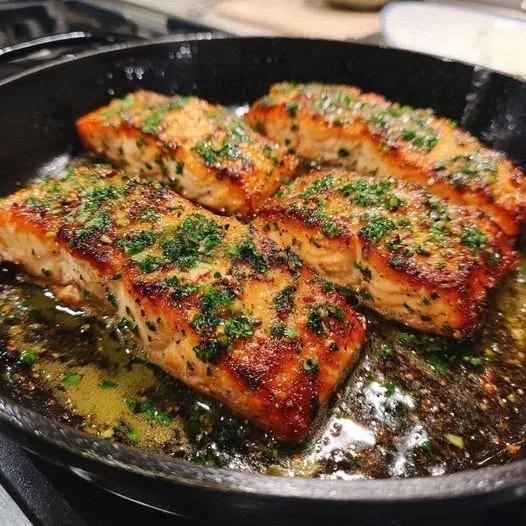
Enjoy tender, flaky salmon coated in a rich garlic butter sauce with this easy Garlic Butter Salmon Fillets recipe. Each fillet develops a beautifully golden exterior while staying moist and flavorful inside, and the combination of fragrant garlic, melted butter, and fresh lemon creates a restaurant-style meal with minimal effort. It is perfect for busy weeknights when you want something delicious without spending hours in the kitchen.
Salmon is naturally rich in protein and provides omega-3 fatty acids, while garlic, butter, and olive oil add plenty of flavor without needing breading or sugary sauces. This high-protein, low-carb recipe is also suitable for many keto-style meal plans. Serve it with roasted asparagus, sautéed spinach, or cauliflower rice for a satisfying meal.
Can This Garlic Butter Salmon Fillets Recipe Support Weight Loss Goals?
Garlic Butter Salmon Fillets can fit into a balanced eating pattern that supports weight-management goals. Salmon provides high-quality protein, which helps maintain muscle and can help you feel satisfied after a meal. It also supplies beneficial fats, including omega-3 fatty acids.
The recipe is naturally low in carbohydrates because it does not rely on flour, breadcrumbs, or sugary sauces. However, butter and olive oil contribute calories, so measuring them helps keep portions consistent. Pairing salmon with vegetables creates a balanced plate without requiring heavy side dishes. No single recipe guarantees weight loss; overall eating habits and portion sizes matter.
Does This Recipe Fit a High-Protein Lifestyle?
Yes, salmon is an excellent source of protein, making this recipe a strong option for a high-protein meal plan. The garlic butter sauce adds richness, while olive oil contributes unsaturated fats and helps the fillets cook evenly. The basic recipe contains virtually no carbohydrates, with approximately 0–1 g net carbs per serving before optional additions. A 6-ounce salmon fillet generally provides around 34–40 g of protein, depending on the type of salmon. Serve it with non-starchy vegetables to create a protein-rich, low-carb meal with plenty of flavor.
Why This Recipe Is Special
- High in protein: Salmon provides substantial protein in each serving.
- Naturally low-carb: No flour, breadcrumbs, or added sugar are needed.
- Rich garlic butter flavor: Garlic and butter create a savory sauce that complements the salmon.
- Quick and simple: The fillets cook in about 10–15 minutes, depending on thickness.
- Nutrient-rich: Salmon supplies omega-3 fats and other important nutrients.
My Personal Experience
These are suggested recipe-specific notes you can adapt to reflect your actual cooking experience.
– I love the buttery garlic aroma. As the garlic gently cooks, it releases a savory fragrance that makes the kitchen smell wonderful. The butter coats the salmon with rich flavor without needing a complicated sauce.
– The salmon turns out tender and flaky. Cooking the fillets just until they reach the right internal temperature helps preserve their texture. The center should separate into moist flakes when gently tested with a fork.
– It feels like a restaurant-style meal. The golden surface and glossy garlic butter make the salmon look elegant on the plate. A squeeze of lemon and a sprinkle of parsley add a fresh finishing touch.
– It is convenient for busy evenings. The ingredients are simple, and the salmon cooks quickly in a skillet or oven. Pair it with steamed vegetables for an easy, complete dinner.
– The seasoning is easy to customize. Black pepper, paprika, parsley, or a pinch of chili flakes can change the flavor without adding many carbohydrates. This makes the recipe easy to adapt to different preferences.
Perfect For
- Quick weeknight dinners: Prepare a flavorful protein-rich meal in around 20 minutes.
- Low-carb meal plans: Serve with asparagus, zucchini, or cauliflower rice.
- Keto-style menus: The basic salmon recipe is naturally very low in carbohydrates.
- Meal preparation: Portion cooked salmon with vegetables for convenient lunches.
- Special dinners: Pair with roasted vegetables and lemon wedges for an elegant plate.
- High-protein eating: Each fillet provides a substantial amount of protein.
Why You’ll Love This Recipe
– Simple ingredients, big flavor. Garlic, butter, and olive oil complement the natural richness of salmon. You do not need a long list of seasonings to make the dish taste delicious.
– Fast cooking time. Salmon fillets cook quickly, making this recipe useful when time is limited. Thin fillets finish sooner, while thicker pieces need a little longer.
– Naturally low in carbohydrates. The basic recipe contains no starchy ingredients or sweet sauces. You can keep the entire meal low-carb by choosing non-starchy vegetable sides.
– Excellent protein content. Salmon provides complete protein that supports normal muscle maintenance and body functions. Add vegetables for fiber and variety without diluting the meal’s main flavor.
– Easy to serve in different ways. Enjoy the salmon with salad, sautéed greens, roasted broccoli, or cauliflower mash. The garlic butter sauce also tastes delicious spooned over the vegetables.
Common Mistakes to Avoid
- Overcooking the salmon: Excessive cooking can make the flesh dry, so check the thickest part early.
- Burning the garlic: Garlic cooks quickly and can turn bitter; use medium-low heat when adding it to butter.
- Moving the fillets too soon: Let the salmon cook undisturbed for a few minutes to help develop a golden surface.
- Adding too much sauce: Excess butter and oil can make the dish unnecessarily heavy, so measure them rather than pouring freely.
Required Equipment
- Large non-stick or stainless-steel skillet — Provides enough room for the fillets to cook without crowding.
- Fish spatula — Helps turn delicate salmon fillets without breaking them.
- Measuring spoons — Keep the butter and olive oil quantities consistent.
- Garlic press or sharp knife — Makes it easy to prepare finely minced garlic.
- Instant-read food thermometer — Helps check doneness accurately.
- Small spoon — Makes it easy to drizzle the garlic butter over the fish.
Storage Instructions
- Refrigerator: Store cooked salmon in a shallow, airtight container at \(4^\circ\text{C}\) / \(40^\circ\text{F}\) or colder and eat within 3–4 days.
- Freezer: Freeze cooled fillets in airtight, freezer-safe containers or tightly wrapped portions for up to 2–3 months for best quality.
- Reheating: Warm gently in a covered skillet over low heat with a teaspoon of water or a little extra butter. Alternatively, heat in an oven at \(150^\circ\text{C}\) / \(300^\circ\text{F}\) until warmed through.
- Microwave option: Heat in short intervals at medium power, covered loosely, to reduce drying.
- Texture tip: Avoid repeated reheating because salmon can become dry and flaky.
- Food safety: Refrigerate leftovers within 2 hours of cooking, or within 1 hour if the temperature is above \(32^\circ\text{C}\) / \(90^\circ\text{F}\).
Recipe Details
- Preparation Time: 5 minutes
- Cooking Time: 10–15 minutes
- Total Time: 15–20 minutes
- Servings: 4
- Best Season: All-season
- Total Calories per Serving: Approximately 400–470 calories
Calories are approximate and depend on the salmon variety, fillet size, and amount of butter and olive oil used.
Short 3-Line Description
Garlic Butter Salmon Fillets feature tender, flaky fish coated in a rich garlic butter sauce. This quick, high-protein, low-carb recipe is packed with savory flavor and beneficial fats. Serve with asparagus, broccoli, or cauliflower rice for a simple and satisfying dinner.
📝 Ingredients
For 4 servings
- 4 salmon fillets, about 6 oz (170 g) each
- 2 tablespoons olive oil
- 3 tablespoons unsalted butter (about 42 g)
- 4 garlic cloves, finely minced
- 1 tablespoon fresh lemon juice
- ½ teaspoon salt, or to taste
- ½ teaspoon black pepper
- ½ teaspoon paprika (optional)
- 1 tablespoon chopped fresh parsley
- Lemon wedges, for serving
Ingredient notes: The two supplied ingredients—salmon fillets and olive oil—are retained, with garlic butter and seasonings added to complete the recipe. Use unsalted butter to control sodium, and choose fresh or fully thawed salmon fillets of similar thickness for more even cooking.
Directions
1. Prepare the salmon. Pat the fillets dry with paper towels and check for any remaining pin bones. Season both sides with salt, black pepper, and optional paprika. Drying the surface helps the fish brown instead of steam.
2. Heat the skillet. Place a large skillet over medium heat and add the olive oil. Allow it to heat for about 1–2 minutes until it shimmers but does not smoke.
3. Sear the salmon. Place the fillets in the skillet, presentation-side down if they have skin. Cook for about 4–5 minutes, depending on thickness, without moving them too early. The surface should turn golden and the fish should release more easily from the pan when ready to turn.
4. Turn and finish cooking. Carefully flip the fillets and cook for another 3–5 minutes. Adjust the time for the thickness of the fish. For food safety, cook salmon to an internal temperature of \(63^\circ\text{C}\) / \(145^\circ\text{F}\) at its thickest point.
5. Make the garlic butter sauce. Reduce the heat to medium-low. Add the butter and minced garlic around the salmon, stirring gently for about 30–60 seconds until fragrant. Do not let the garlic become dark brown, as it can turn bitter.
6. Add lemon and baste. Stir in the lemon juice, then carefully spoon the melted garlic butter over the fillets for about 30 seconds. The salmon should look glossy and separate into moist flakes when tested gently with a fork.
7. Garnish and serve. Remove the skillet from the heat and sprinkle the salmon with fresh parsley. Serve immediately with lemon wedges and your favorite vegetables, spooning a little garlic butter over each portion.
High-protein cooking tip: Keep one fillet as a measured serving and pair it with non-starchy vegetables. Salmon already provides plenty of protein, so there is no need to add a heavy, calorie-dense sauce.
Nutrition Facts (Per Serving – Approximate)
Estimated per serving, assuming one 6-ounce salmon fillet, ½ tablespoon olive oil, ¾ tablespoon butter, and the seasonings divided across four servings.
| Nutrient | Approximate amount |
|---|---|
| Calories | 440 kcal |
| Fats | 31 g |
| Cholesterol | 115 mg |
| Sodium | 430 mg |
| Potassium | 850 mg |
| Total Carbohydrates | 1 g |
| Fiber | 0 g |
| Net Carbs | 1 g |
| Sugars | 0 g |
| Protein | 38 g |
| Calcium | 25 mg |
These are estimates, not laboratory-tested values. Salmon type, exact fillet weight, butter quantity, and added salt can change the nutrition values.
Notes
- For extra flavor: Add lemon zest, fresh dill, or a pinch of chili flakes.
- For a lighter version: Reduce the butter slightly and use a measured amount of olive oil.
- For crispier salmon: Pat the fillets dry before seasoning and avoid overcrowding the skillet.
- For a dairy-free version: Replace butter with olive oil or a suitable dairy-free alternative; the flavor and nutrition will change.
- Allergy information: Salmon is a fish allergen, and butter contains dairy.
- Food safety: Keep raw salmon separate from ready-to-eat foods and wash hands, utensils, and cutting boards after handling it.
- Serving suggestion: Pair with asparagus, green beans, broccoli, or cauliflower rice to keep the meal low in carbohydrates.
Frequently Asked Questions
1. Is garlic butter salmon keto-friendly? Yes, the basic recipe is very low in carbohydrates and can fit into many ketogenic meal plans.
2. How do I know when salmon is cooked? The thickest part should reach \(63^\circ\text{C}\) / \(145^\circ\text{F}\), and the flesh should separate into moist flakes.
3. Can I use frozen salmon fillets? Yes, thaw them safely in the refrigerator before cooking and pat them dry thoroughly.
4. Can I bake the salmon instead of pan-frying it? Yes, bake seasoned fillets at \(200^\circ\text{C}\) / \(400^\circ\text{F}\) for roughly 12–15 minutes, depending on thickness, then add the garlic butter sauce.
5. What sides go best with garlic butter salmon? Asparagus, roasted broccoli, sautéed spinach, green beans, and cauliflower rice all complement the rich garlic butter flavor.
6. Can I prepare this recipe ahead of time? You can mince the garlic and measure the seasonings ahead, but cooking the salmon just before serving gives the best texture.