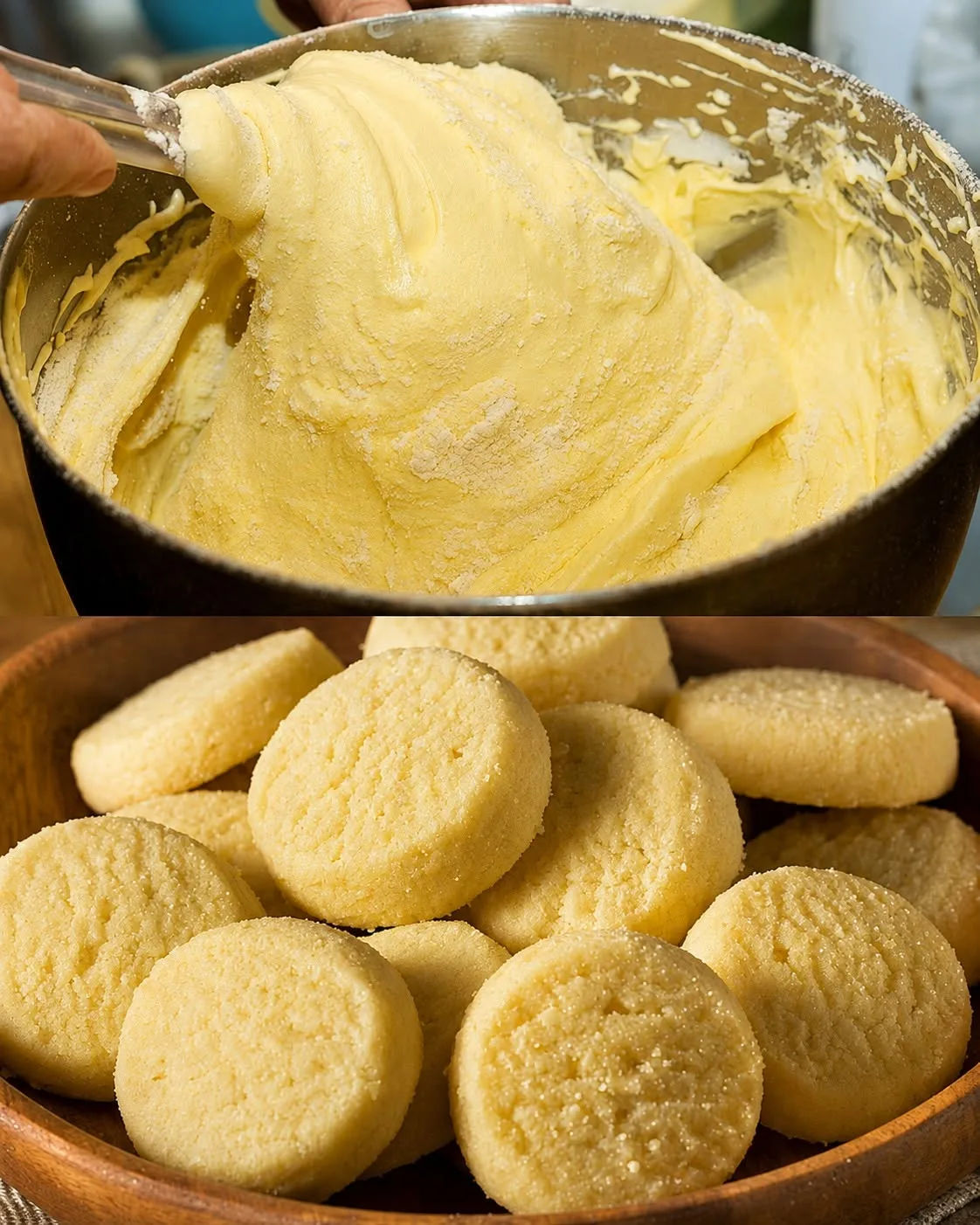
These Diabetic-Friendly Shortbread Cookies are buttery, tender, and delicately crisp around the edges with a soft, melt-in-your-mouth center. Made with almond flour and a reduced-sugar sweetener, they offer classic shortbread flavor in a more carbohydrate-conscious treat. They are simple enough for everyday baking yet elegant enough for holidays, tea time, and special gatherings.
Can These Shortbread Cookies Support Weight Loss Goals?
They can fit into a balanced eating pattern when enjoyed in moderation. Almond flour provides some fiber, protein, and healthy fats, while using a reduced-sugar sweetener limits added sugar. However, butter and almond flour are calorie-dense, so portion size remains important.
Does This Recipe Fit a High-Protein Lifestyle?
These cookies contain more protein than traditional shortbread because almond flour contributes protein, but they are not a high-protein food. Each cookie provides approximately 3 g of protein. For a more protein-focused snack, pair one cookie with plain Greek yogurt or another unsweetened protein-rich food.
Why This Recipe Is Special
- Reduced-sugar: Uses a granulated sugar alternative instead of traditional sugar.
- Lower-carb friendly: Almond flour replaces most traditional wheat flour.
- Buttery and tender: The classic shortbread texture remains rich and delicate.
- Simple ingredients: Easy to prepare with pantry-friendly ingredients.
- Perfectly portioned: Small cookies make portion control easier.
My Personal Experience
- I love the delicate buttery texture.
These cookies are crisp around the edges while staying tender enough to melt in your mouth. - The almond flour adds a subtle nuttiness.
It complements the butter and vanilla without overpowering the classic shortbread flavor. - They are wonderfully simple to prepare.
The dough comes together quickly and can be chilled before slicing or shaping. - A little vanilla makes a big difference.
It gives the cookies a warm bakery-style aroma and enhances the buttery flavor.
Perfect For
These shortbread cookies are perfect for afternoon tea, coffee breaks, holiday cookie trays, family gatherings, dessert tables, lunch boxes, and diabetes-conscious snack options. Enjoy one or two with unsweetened tea or coffee.
Why You’ll Love This Recipe
- Buttery and crisp:
These cookies have the classic rich shortbread texture.
The edges become lightly golden while the centers stay tender. - Lower in carbohydrates:
Almond flour keeps the recipe lower in carbohydrates than traditional flour-based shortbread.
A sugar substitute also reduces added sugar. - Easy to make:
The dough requires only a few simple mixing steps.
There is no complicated decorating required. - Great for holidays:
The dough can be shaped into rounds, squares, or festive cutouts.
A light sprinkle of cinnamon can add seasonal flavor. - Convenient to store:
The baked cookies keep well in an airtight container.
They can also be frozen for longer storage.
Common Mistakes to Avoid
- Skipping the chilling step: Chilled dough helps prevent the cookies from spreading too much.
- Overbaking: Remove the cookies when the edges are lightly golden; they will firm as they cool.
- Using liquid sweetener: Liquid sweeteners can change the structure and texture of the dough.
- Overmixing: Mix only until the dough comes together for a tender cookie.
Required Equipment
- Mixing bowl — provides enough space for combining the dough evenly.
- Electric mixer — creams the butter and sweetener smoothly.
- Baking sheet — provides even heat for consistent browning.
- Parchment paper — prevents sticking and simplifies cleanup.
- Cookie cutter — makes evenly shaped cookies if using rolled dough.
Storage Instructions
Allow the cookies to cool completely before storing them.
Place them in an airtight container and keep them at room temperature for up to 5–7 days.
For longer storage, freeze the cookies in a freezer-safe container for approximately 2–3 months. Separate layers with parchment paper to prevent sticking.
Frozen cookies can thaw at room temperature for approximately 20–30 minutes.
Recipe Details
- Preparation Time: 15 minutes
- Chilling Time: 30 minutes
- Cooking Time: 10–12 minutes
- Total Time: Approximately 55 minutes
- Servings: 18 cookies
- Best Season: All-season
- Total Calories: Approximately 105 calories per cookie
Short 3-Line Description
These Diabetic-Friendly Shortbread Cookies are buttery, tender, and delicately crisp with a subtle almond flavor.
Almond flour and a reduced-sugar sweetener make them a more carbohydrate-conscious alternative to classic shortbread.
Perfect for coffee breaks, holidays, afternoon tea, and simple homemade desserts.
📝 Ingredients
- 1 1/2 cups almond flour — approximately 168 g
- 1/4 cup unsalted butter, softened — approximately 57 g
- 1/4 cup powdered monk fruit or erythritol sweetener — approximately 48 g
- 1 large egg yolk
- 1 tsp vanilla extract
- 1/4 tsp salt
- 1/4 tsp baking powder
- 1 tbsp coconut flour — approximately 7 g
Ingredient notes: Use powdered sweetener for the smoothest texture. If your sweetener contains a different blend of ingredients, sweetness and texture may vary.
Directions
- Prepare the oven.
Preheat the oven to 325°F (165°C). Line a baking sheet with parchment paper. - Cream the butter and sweetener.
Place softened butter and powdered sweetener in a mixing bowl. Beat on medium speed for 1–2 minutes until smooth and creamy. - Add the egg yolk and vanilla.
Beat in the egg yolk and vanilla until fully incorporated. - Combine the dry ingredients.
In a separate bowl, whisk together almond flour, coconut flour, baking powder, and salt. - Make the dough.
Add the dry ingredients to the butter mixture. Mix on low speed just until a soft dough forms. Avoid overmixing. - Chill the dough.
Shape the dough into a disc, wrap it, and refrigerate for approximately 30 minutes. The dough should become firm enough to handle easily. - Shape the cookies.
Roll the chilled dough between two sheets of parchment paper to approximately 1/4-inch thickness. Cut into 18 small rounds or your preferred shapes. - Arrange on the baking sheet.
Place the cookies on the prepared baking sheet, leaving approximately 1 inch between them. - Bake.
Bake at 325°F (165°C) for 10–12 minutes, until the edges are lightly golden. The centers may still look slightly soft. - Cool.
Let the cookies cool on the baking sheet for 5 minutes, then transfer them to a cooling rack. They will firm up as they cool.
High-protein cooking tip: These cookies are not intended to be a high-protein food. Pair one cookie with plain Greek yogurt or another protein-rich, unsweetened food for a more balanced snack.
Nutrition Facts — Per Cookie (Approximate)
Nutrition values are estimates and vary according to the almond flour, butter, sweetener, and cookie size.
- Calories: ~105 kcal
- Fat: ~9 g
- Cholesterol: ~20 mg
- Sodium: ~55 mg
- Potassium: ~45 mg
- Total Carbohydrates: ~4 g
- Fiber: ~2 g
- Net Carbs: ~2 g
- Sugars: ~1 g
- Protein: ~3 g
- Calcium: ~30 mg
Notes
- Storage: Keep in an airtight container at room temperature for 5–7 days.
- Freezing: Freeze baked cookies for up to 2–3 months.
- Reheating: Not necessary; allow frozen cookies to thaw naturally.
- Allergy note: Contains almonds, dairy, and egg.
- Sweetener note: Choose a granulated or powdered sugar alternative suitable for baking.
- Flavor boost: Add lemon zest, orange zest, almond extract, cinnamon, or a small amount of unsweetened cocoa powder.
- Texture tip: Do not overbake. The cookies should be lightly golden around the edges and will firm as they cool.
- Diabetes note: These cookies are lower in added sugar and carbohydrates than traditional shortbread, but they still contain calories and carbohydrates. Portion size remains important.
Frequently Asked Questions
1. Can I use regular flour instead of almond flour?
Yes, but the carbohydrate and nutritional values will change significantly.
2. Can I use granulated sweetener instead of powdered sweetener?
Yes, but powdered sweetener generally gives the cookies a smoother shortbread texture.
3. Why are my cookies spreading?
The butter may have been too warm, so chill the shaped dough before baking if necessary.
4. Can I make the dough ahead of time?
Yes, refrigerate the wrapped dough for up to 2 days before shaping and baking.
5. Can I freeze these shortbread cookies?
Yes, baked cookies can be frozen for approximately 2–3 months.
6. Are these cookies suitable for people with diabetes?
They are designed to be more carbohydrate-conscious than traditional shortbread, but they still contain carbohydrates, so individual dietary needs and portion sizes should be considered.