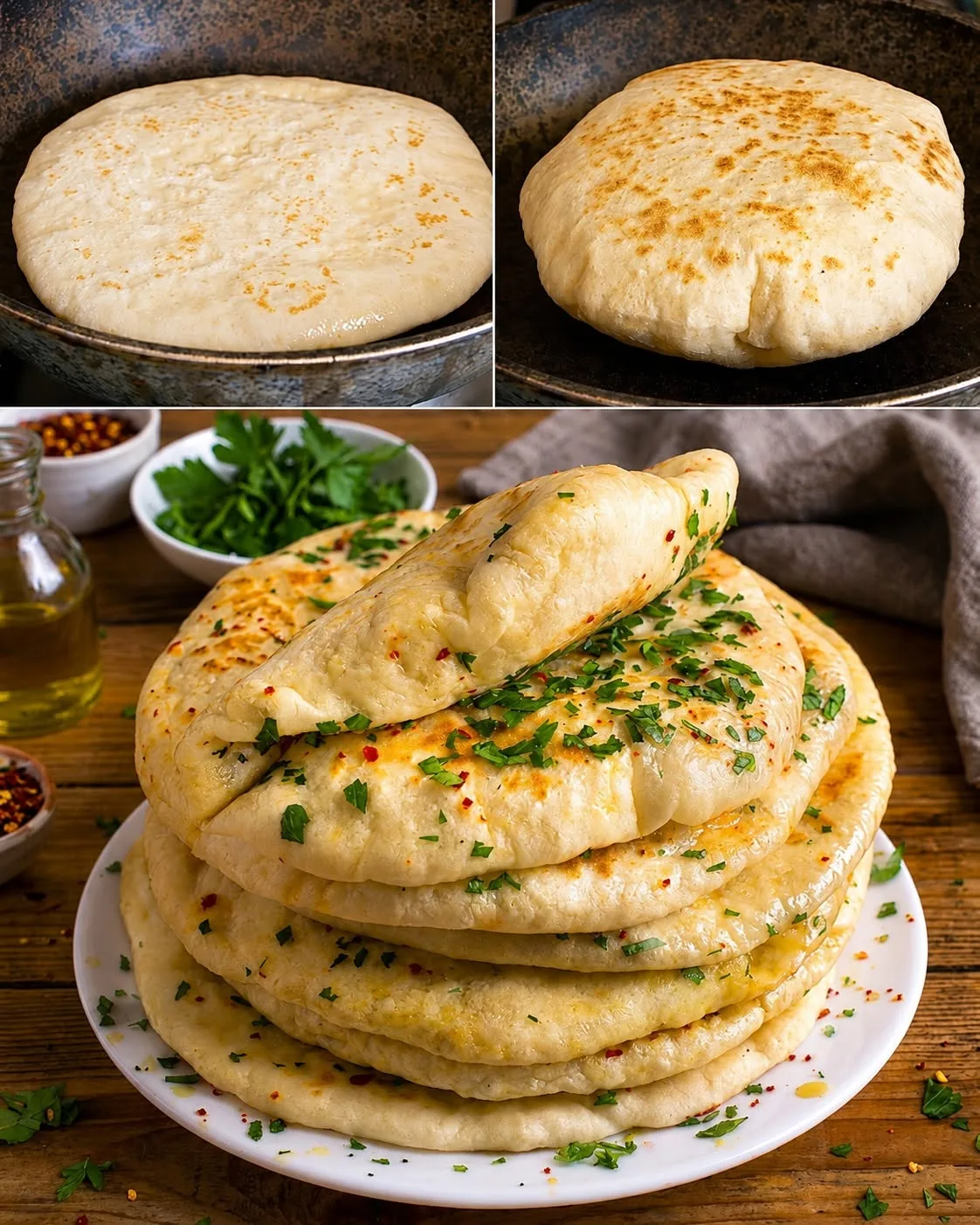
Turkish Flatbread is soft, chewy, and wonderfully golden, with a lightly crisp exterior and a tender, airy center. This simple homemade bread is delicious served warm with soups, grilled meats, dips, eggs, or fresh vegetables. A touch of olive oil and sesame or nigella seeds adds extra flavor and a beautiful finish.
Can This Turkish Flatbread Support Weight Loss Goals?
This flatbread can fit into a balanced eating pattern when enjoyed in a sensible portion. Since traditional flatbread is primarily made from flour, it is relatively carbohydrate-dense, so portion size matters. Pairing it with protein-rich foods and vegetables can create a more balanced meal.
Does This Recipe Fit a High-Protein Lifestyle?
Traditional Turkish Flatbread is not a high-protein food by itself, although the flour contributes some protein. Each serving provides approximately 7 g of protein, depending on the flour and serving size. For a higher-protein meal, serve it with grilled chicken, eggs, Greek yogurt, lean meat, or a protein-rich dip.
Why This Recipe Is Special
- Soft and chewy: The dough produces a tender interior with a satisfying bite.
- Golden crust: A hot oven creates beautiful browning on the surface.
- Simple ingredients: Uses everyday pantry staples.
- Versatile: Perfect with savory meals, dips, breakfast, or grilled foods.
- Homemade comfort: Freshly baked flatbread tastes significantly better than packaged bread.
My Personal Experience
- I love the soft center of this flatbread.
The dough stays tender inside while the surface develops a delicious golden crust. - The sesame and nigella seeds add so much flavor.
They provide a subtle nuttiness and a traditional aromatic finish. - It is especially good when served warm.
Fresh from the oven, the bread is soft enough to tear apart and enjoy with dips or sauces. - The flat shape makes it incredibly versatile.
I can use it alongside dinner or turn it into a simple wrap for lunch.
Perfect For
This Turkish Flatbread is perfect for family dinners, breakfast, brunch, weekend baking, soups, grilled meats, kebabs, dips, sandwiches, wraps, and Mediterranean-inspired meals. It is especially enjoyable when served warm alongside hummus, yogurt dips, grilled vegetables, or seasoned meats.
Why You’ll Love This Recipe
- Soft and flavorful:
The dough produces a tender, chewy flatbread with a lightly crisp surface.
Sesame and nigella seeds add a delicious traditional touch. - Easy ingredients:
You only need basic flour, yeast, water, yogurt, salt, and olive oil.
Most of these ingredients are already common pantry staples. - Great with almost anything:
Serve it with dips, soups, eggs, meat, or vegetables.
It can also be used as a wrap or sandwich-style bread. - Freshly baked texture:
High oven heat helps create a beautifully browned exterior.
The inside remains soft and flexible. - Perfect for sharing:
The flatbreads can be torn into pieces and placed in the center of the table.
They make family-style meals feel extra special.
Common Mistakes to Avoid
- Adding too much flour: Excess flour can make the flatbread dense instead of soft and chewy.
- Skipping the resting time: The dough needs time to relax and rise for the best texture.
- Using a cold oven: A properly preheated oven helps create the characteristic golden exterior.
- Overbaking: Remove the bread once it is golden-brown to prevent it from becoming dry.
Required Equipment
- Large mixing bowl — provides enough room for kneading and rising.
- Baking sheet — gives the flatbread a stable surface for baking.
- Parchment paper — helps prevent sticking and simplifies cleanup.
- Kitchen towel — keeps the dough covered while it rises.
- Rolling pin — makes shaping the dough into an even flatbread easier.
Storage Instructions
Allow the flatbread to cool completely before storing. Place it in an airtight container or resealable bag and keep it at room temperature for up to 2 days.
For longer storage, refrigerate for up to 5 days, although refrigeration may make the bread slightly firmer.
The flatbreads freeze well for approximately 2–3 months. Separate individual pieces with parchment paper before placing them in a freezer-safe bag.
Reheat refrigerated or thawed flatbread in a skillet over medium heat for 30–60 seconds per side, or warm it in a 350°F (175°C) oven for several minutes.
Recipe Details
- Preparation Time: 20 minutes
- Resting Time: 1 hour
- Cooking Time: 10–15 minutes
- Total Time: Approximately 1 hour 35 minutes
- Servings: 6 flatbreads
- Best Season: All-season
- Total Calories: Approximately 220 calories per flatbread
Short 3-Line Description
This homemade Turkish Flatbread is soft, chewy, golden, and lightly crisp around the edges.
Sesame and nigella seeds add a traditional savory flavor and beautiful finish.
Serve it warm with dips, grilled meats, vegetables, soups, or your favorite Turkish-inspired dishes.
📝 Ingredients
- 3 cups all-purpose flour — approximately 375 g
- 1 tsp instant yeast
- 1 tsp sugar
- 1 tsp salt
- 3/4 cup warm water — approximately 180 ml
- 1/2 cup plain Greek yogurt — approximately 120 g
- 1 tbsp olive oil
- 1 tbsp sesame seeds
- 1 tbsp nigella seeds
- 1 egg yolk
- 1 tbsp water
Ingredient notes: The water should be warm rather than hot. Very hot water can interfere with the yeast. If using active dry yeast instead of instant yeast, allow it to activate in the warm water with the sugar for approximately 5–10 minutes.
Directions
- Prepare the dough.
In a large mixing bowl, combine flour, instant yeast, sugar, and salt. - Add the wet ingredients.
Add warm water, Greek yogurt, and olive oil. Stir with a wooden spoon until a rough dough forms. - Knead the dough.
Transfer the dough to a lightly floured surface and knead for approximately 7–8 minutes. The dough should become smooth, elastic, and slightly tacky but not excessively sticky. - First rise.
Place the dough in a lightly oiled bowl and cover it with a clean kitchen towel. Let it rise in a warm, draft-free area for approximately 45–60 minutes, or until noticeably puffy and nearly doubled in size. - Divide the dough.
Gently press the air out of the dough and divide it into 6 equal portions. Shape each piece into a ball. - Rest the dough.
Cover the dough balls and let them rest for 10 minutes. This relaxes the gluten and makes shaping easier. - Preheat the oven.
Heat the oven to 450°F (230°C). Place a baking sheet inside while the oven preheats if you want a particularly hot surface. - Shape the flatbreads.
Roll or gently stretch each dough ball into an oval or round approximately 1/4-inch thick. Avoid making them extremely thin because the center should remain soft. - Prepare the topping.
Whisk the egg yolk with 1 tablespoon water. Lightly brush the surface of each flatbread with the egg mixture. - Add the seeds.
Sprinkle sesame and nigella seeds evenly over the surface. - Bake.
Place the flatbreads on the hot baking sheet and bake at 450°F (230°C) for 8–12 minutes, depending on thickness. The surface should puff slightly and become golden-brown. - Finish and serve.
Remove from the oven and let the bread rest for 2–3 minutes. Serve warm.
High-protein cooking tip: Pair one flatbread with Greek yogurt, eggs, grilled chicken, turkey, or lean beef to create a more protein-rich meal.
Nutrition Facts — Per Flatbread (Approximate)
Nutrition values are estimates and can vary according to flour, yogurt, portion size, and toppings.
- Calories: ~220 kcal
- Fat: ~5 g
- Cholesterol: ~35 mg
- Sodium: ~410 mg
- Potassium: ~120 mg
- Total Carbohydrates: ~35 g
- Fiber: ~2 g
- Net Carbs: ~33 g
- Sugars: ~2 g
- Protein: ~7 g
- Calcium: ~55 mg
Notes
- Storage: Keep in an airtight container for up to 2 days at room temperature or 5 days refrigerated.
- Freezing: Freeze for approximately 2–3 months with parchment between individual flatbreads.
- Reheating: Warm in a dry skillet or oven for the best texture.
- Allergy note: Contains wheat, gluten, egg, and dairy.
- Texture tip: Do not add excessive flour during kneading; a slightly soft dough produces a more tender flatbread.
- Flavor boost: Add dried oregano, za’atar, chopped fresh parsley, or a little minced garlic to the topping.
- Serving idea: Pair with hummus, cacık, grilled chicken, kebabs, roasted vegetables, or a fresh salad.
Frequently Asked Questions
1. Can I make Turkish Flatbread without Greek yogurt?
Yes, you can replace the yogurt with additional water, although the bread may be slightly less tender.
2. Can I use whole wheat flour?
Yes, but replacing all the flour may produce a denser flatbread, so a combination of whole wheat and all-purpose flour works well.
3. Why is my flatbread hard?
Too much flour or overbaking are common causes of hard flatbread.
4. Can I prepare the dough ahead of time?
Yes, refrigerate the covered dough overnight and allow it to come closer to room temperature before shaping.
5. Can I cook this flatbread on a skillet?
Yes, cook it in a lightly oiled skillet over medium-high heat for about 2–3 minutes per side, until golden and cooked through.
6. What can I serve with Turkish Flatbread?
It pairs beautifully with hummus, yogurt dips, grilled meats, eggs, roasted vegetables, soups, and fresh salads.