Description
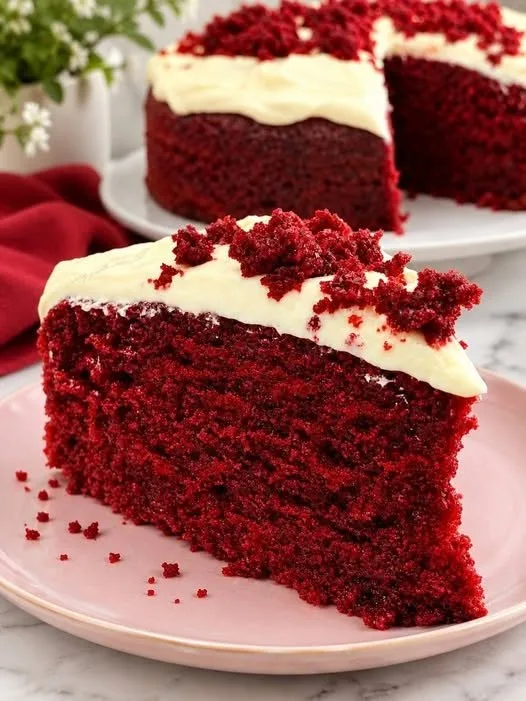
This Vegan Red Velvet Cake is a beautiful, soft, and velvety dessert with a vibrant red color, delicate cocoa flavor, and a subtle hint of vanilla. Made without eggs or dairy, it features a moist, tender crumb and a creamy vegan frosting that makes every slice feel special. Whether you’re baking for a birthday, holiday gathering, or simply a sweet weekend treat, this plant-based cake is sure to impress. For those exploring high-protein desserts, you can incorporate protein-rich plant-based ingredients into the frosting, while lower-carb alternatives can inspire a modified version. However, the traditional cake contains flour and sugar, so it is not naturally low-carb or high-protein.
Can This Vegan Red Velvet Cake Support Weight Loss Goals?
Vegan Red Velvet Cake can fit into a balanced eating routine when enjoyed in a portion that suits your overall dietary needs. Although traditional cake is primarily a source of carbohydrates and fats, smaller servings can let you enjoy dessert alongside a varied, balanced diet. You can experiment with reducing the sugar slightly, using a lighter frosting, or incorporating protein-rich ingredients such as silken tofu into the frosting. These changes may alter the cake’s texture and nutritional content, so it is helpful to consider the full recipe rather than assuming that vegan or dairy-free automatically means lower in calories.
Does Vegan Red Velvet Cake Fit a High-Protein Lifestyle?
Traditional vegan red velvet cake is not particularly high in protein because its main ingredients are flour, sugar, oil, and plant-based milk. The cake provides carbohydrates for energy, while its protein content mainly comes from flour and plant-based milk. Its net carbs are relatively high because it contains refined flour and added sugar, making it unsuitable for most strict low-carb or keto diets. For a more protein-focused variation, try adding a small amount of plant protein powder or using a protein-rich tofu-based frosting. The final protein and net carbohydrate values depend on the ingredients, frosting, and serving size.
Why This Recipe Is Special
- Classic red velvet flavor: A delicate cocoa taste combines with vanilla and a gentle tang for a distinctive dessert.
- Completely plant-based: No eggs, butter, or dairy milk are required.
- Soft and moist texture: Plant milk, vinegar, and oil help create a tender crumb.
- Beautiful presentation: The vivid red cake and creamy white frosting create an eye-catching contrast.
- Easy to customize: Adjust the frosting, decorations, or ingredient choices to suit different occasions and preferences.
My Personal Experience
The following first-person points are suggested recipe-blog wording that you can personalize to reflect your actual baking experience.
– I love the soft, velvety crumb. The combination of oil, plant milk, and vinegar helps create a tender cake that stays moist after cooling. Each slice has a delicate cocoa flavor that pairs beautifully with creamy vegan frosting.
– The red color makes it feel special. A vibrant red interior creates a lovely surprise when the cake is sliced and served. I would use gel food coloring for a rich shade without adding too much liquid to the batter.
– The dairy-free frosting completes the cake. A smooth vegan cream-cheese-style frosting balances the sweetness of the cake with a gentle tang. Spreading it over a completely cooled cake also helps create a clean, attractive finish.
– It is wonderful for celebrations. This cake looks festive enough for birthdays, anniversaries, holiday tables, and family gatherings. A few cake crumbs or fresh berries on top make the presentation even more inviting.
– I appreciate how adaptable it is. You can bake the batter in round pans for a layered cake or use a square pan for easy slices. Plant-based frosting alternatives also make it possible to adjust the flavor and texture to your preference.
Perfect For
- Birthdays: A striking red cake with creamy frosting makes an attractive celebration centerpiece.
- Holiday gatherings: Its rich color and classic flavor work beautifully for festive dessert tables.
- Afternoon tea: Serve a small slice with tea, coffee, or a warm plant-based drink.
- Family celebrations: This dairy-free and egg-free dessert is suitable for many plant-based menus.
- Dessert meal prep: Bake ahead and refrigerate appropriately so slices are ready when you want a treat.
- Vegan baking: A useful recipe for anyone looking to make a classic cake without conventional dairy or eggs.
- Special occasions: Decorate with berries, chocolate shavings, or cake crumbs for an elegant finish.
Why You’ll Love This Recipe
– Moist and tender: Oil helps keep the cake soft, while vinegar reacts with baking soda to support a light crumb. The result is a cake that feels delicate rather than dry or dense.
– Rich cocoa and vanilla flavor: A small amount of cocoa adds depth without overpowering the signature red velvet taste. Vanilla rounds out the flavor and pairs naturally with the frosting.
– Egg-free and dairy-free: Plant milk, oil, and vinegar provide structure and moisture without traditional animal-based ingredients. A suitable vegan frosting completes the recipe.
– Beautiful for serving: The red interior contrasts with the pale frosting, making each slice visually appealing. A simple crumb decoration can make the cake look polished without complicated techniques.
– Easy to personalize: Adjust the food coloring, frosting sweetness, and decorations to suit your occasion. You can also explore protein-enriched frosting variations while keeping the classic cake flavor.
Common Mistakes to Avoid
- Overmixing the batter: Mixing too vigorously after adding the flour can develop excess gluten and make the cake tough; stir only until combined.
- Using too much food coloring: Excess liquid coloring can affect the batter’s consistency, so gel coloring is a convenient option.
- Overbaking the cake: Baking too long can dry out the crumb; begin checking when the edges are set and a toothpick comes out with a few moist crumbs.
- Frosting the cake while warm: Warm cake can melt the frosting and cause it to slide, so cool the layers completely before decorating.
Required Equipment
- Two 8-inch (20 cm) round cake pans — Help the cake layers bake evenly and make assembly straightforward.
- Mixing bowls — Keep wet and dry ingredients separate before combining.
- Whisk — Distributes the cocoa, flour, and raising agents evenly.
- Measuring cups and spoons or a kitchen scale — Improve consistency and reduce ingredient-measuring errors.
- Rubber spatula — Helps fold the batter gently and scrape the bowl clean.
- Electric mixer — Makes vegan frosting smoother and easier to spread.
- Cooling rack — Allows air to circulate around the cake and prevents a soggy base.
- Offset spatula — Helps spread frosting neatly across the cake layers.
- Toothpick or cake tester — Checks whether the center has finished baking.
Storage Instructions
At room temperature: If using a shelf-stable vegan buttercream and your kitchen is cool, the unfrosted cake can generally be covered and kept for up to 2 days. Follow the frosting manufacturer’s storage guidance.
Refrigerator: Cakes topped with vegan cream-cheese-style frosting should be stored in an airtight cake container or covered cake carrier in the refrigerator. For best quality, enjoy within 3–4 days.
Freezer: Freeze unfrosted cake layers after they have cooled completely. Wrap each layer tightly in plastic wrap, then place it in a freezer-safe bag or container. Freeze for up to 2–3 months for best quality. Thaw overnight in the refrigerator before frosting.
Reheating: This cake is usually served at room temperature. Let a refrigerated slice sit out briefly before serving, while following food-safety guidance for the frosting. Avoid microwaving frosted slices for long periods because the frosting may melt.
High-protein variation: If you make a tofu-based or other protein-enriched frosting, refrigerate it promptly and follow the storage guidance for its most perishable ingredient. Added protein does not automatically extend the cake’s shelf life.
Recipe Details

Vegan Red Velvet Cake
Egg-free · Dairy-free · Soft and moist
A classic celebration cake with cocoa and vanilla notes.
Preparation time
25 minutes
Cooking time
30 minutes
Total time
55 minutes
Servings
12 slices
Best season
All-season
Calories per serving
~390 kcal
Calories are approximate and include the vegan frosting; actual values depend on ingredient brands and slice size.
Short 3-Line Description
This Vegan Red Velvet Cake features a soft, moist red crumb with delicate cocoa and vanilla flavors. Finished with smooth dairy-free frosting, it is a beautiful dessert for birthdays, holidays, and special gatherings. Enjoy a slice as an occasional treat or experiment with protein-enriched frosting for a different nutritional profile.
📝 Ingredients
Makes one two-layer 8-inch cake, approximately 12 servings.
For the cake
- 2½ cups (300 g) all-purpose flour.
- 1½ cups (300 g) granulated sugar.
- 2 tablespoons (10 g) unsweetened cocoa powder.
- 1 teaspoon baking soda.
- ½ teaspoon baking powder.
- ½ teaspoon salt.
- 1½ cups (360 ml) unsweetened plant-based milk, preferably soy or oat.
- 1 tablespoon (15 ml) apple cider vinegar or white vinegar.
- ½ cup (120 ml) neutral vegetable oil.
- 2 teaspoons (10 ml) vanilla extract.
- 1–2 teaspoons red gel food coloring, or as needed.
For the vegan frosting
- ½ cup (113 g) vegan butter, softened but not melted.
- 8 oz (225 g) vegan cream-cheese alternative, chilled according to package directions.
- 3 cups (360 g) powdered sugar, sifted.
- 1 teaspoon (5 ml) vanilla extract.
- 1–2 teaspoons plant-based milk, only if needed to adjust consistency.
Ingredient notes:
- Use unsweetened plant milk so the sweetness remains balanced.
- Gel food coloring generally provides a stronger red shade with less added liquid.
- Choose vegan-certified sugar and food coloring if you want every ingredient to meet your vegan requirements.
- The frosting recipe uses vegan butter and a cream-cheese alternative; different brands can vary in firmness and sweetness.
Directions
1. Preheat and prepare the pans — 5 minutes. Preheat the oven to 350°F (175°C). Grease two 8-inch round cake pans and line the bottoms with parchment paper. This helps the layers release cleanly after baking.
2. Combine the dry ingredients — 3 minutes. In a large mixing bowl, whisk together the flour, sugar, cocoa powder, baking soda, baking powder, and salt. Break up any cocoa lumps so the batter develops an even color.
3. Prepare the wet ingredients — 3 minutes. In a separate bowl, whisk together the plant milk, vinegar, vegetable oil, vanilla extract, and red gel coloring. The liquid should have a vivid, even red color before it is added to the flour.
4. Make the batter — 2–3 minutes. Pour the wet mixture into the dry ingredients and stir gently with a whisk or spatula until just combined. The batter should be smooth and pourable, without visible dry flour. Avoid prolonged mixing, which can make the cake dense.
5. Divide and bake — 28–32 minutes. Divide the batter evenly between the prepared pans and place them on the middle oven rack. Bake at 350°F (175°C) until the tops spring back lightly when touched and a toothpick inserted into the center comes out clean or with a few moist crumbs.
6. Cool the cake layers — 15–20 minutes, then fully cool. Let the cakes rest in their pans for about 10 minutes before turning them onto a cooling rack. Allow them to cool completely before frosting. The crumb should feel soft but stable, and the layers should not release steam.
7. Prepare the frosting — 5 minutes. Beat the softened vegan butter with an electric mixer until smooth. Add the vegan cream-cheese alternative and vanilla, mixing until combined. Gradually add the powdered sugar and beat until creamy. If the frosting is too thick, add plant milk a teaspoon at a time.
8. Assemble the cake — 5–10 minutes. Place one cooled layer on a serving plate and spread an even layer of frosting on top. Add the second layer and cover the top and sides with the remaining frosting. Decorate with a few red cake crumbs if desired.
9. Chill and serve — 20–30 minutes, optional. Refrigerate the assembled cake briefly to help the frosting set, especially if the kitchen is warm. Let slices soften slightly before serving for the best cake texture, while following safe handling guidance for the frosting.
High-protein baking tips:
- Soy milk usually contributes more protein than almond or rice milk, although the amount varies by brand.
- For a protein-enriched variation, try a small amount of plant protein powder in the frosting rather than substantially changing the cake batter. Add liquid gradually to maintain a spreadable texture.
- A tofu-based frosting can provide more protein, but it will have a different flavor and texture from traditional cream-cheese-style frosting.
- Remember that adding protein ingredients does not automatically make a cake low-carb; flour and sugar remain the main carbohydrate sources.
Nutrition Facts (Per Serving – Approximate)
Estimated for 1 of 12 slices, including the vegan frosting.
| Nutrient | Approximate amount |
|---|---|
| Calories | 390 kcal |
| Total fat | 17 g |
| Cholesterol | 0 mg |
| Sodium | 290 mg |
| Potassium | 100 mg |
| Total carbohydrates | 57 g |
| Fiber | 1 g |
| Net carbs | 56 g |
| Sugars | 39 g |
| Protein | 4 g |
| Calcium | 35 mg |
These are estimates based on typical ingredients, not laboratory-tested figures. Net carbs are calculated as total carbohydrates minus fiber. Actual nutrition depends on the flour, plant milk, vegan butter, frosting, and serving size.
Notes
- Storage: Keep the frosted cake refrigerated in an airtight container for 3–4 days. Unfrosted layers can be frozen for 2–3 months for best quality.
- Reheating: The cake is best served at room temperature after a short rest outside the refrigerator; avoid heating the frosting directly.
- Allergy notes: This recipe contains wheat and may contain soy depending on the plant milk and frosting. Check labels for coconut, nuts, and other allergens.
- Flavor boosts: Add a little extra vanilla, a pinch of espresso powder, or a few chocolate shavings to complement the cocoa.
- Color tip: Use red gel coloring gradually, because different brands have different strengths and shades.
- Protein variation: Try a tofu-based or protein-enriched frosting if desired, and calculate the nutrition using the actual ingredient labels.
Frequently Asked Questions
1. Can I make Vegan Red Velvet Cake without food coloring? Yes, you can omit the coloring, although the cake will be brownish-red or cocoa-colored rather than the classic bright red.
2. Can I use almond milk instead of soy milk? Yes, unsweetened almond milk works, but it generally provides less protein than soy milk.
3. Why is vinegar used in vegan red velvet cake? Vinegar reacts with baking soda to help the cake rise and contributes to a tender crumb.
4. Can I make this cake gluten-free? Yes, use a suitable gluten-free baking flour blend formulated for cakes, recognizing that the texture may differ from the original.
5. Is Vegan Red Velvet Cake keto-friendly? The standard recipe is not keto-friendly because it contains substantial amounts of flour and sugar, but a separately developed low-carb recipe could use alternative flours and sweeteners.
6. How can I increase the protein content? Use soy milk and experiment with a protein-enriched or tofu-based frosting, then recalculate the nutrition using the exact ingredients.
Do you like this personality?