Why Is Ground Beef Gray Inside but Red Outside? What It Means and What to Do
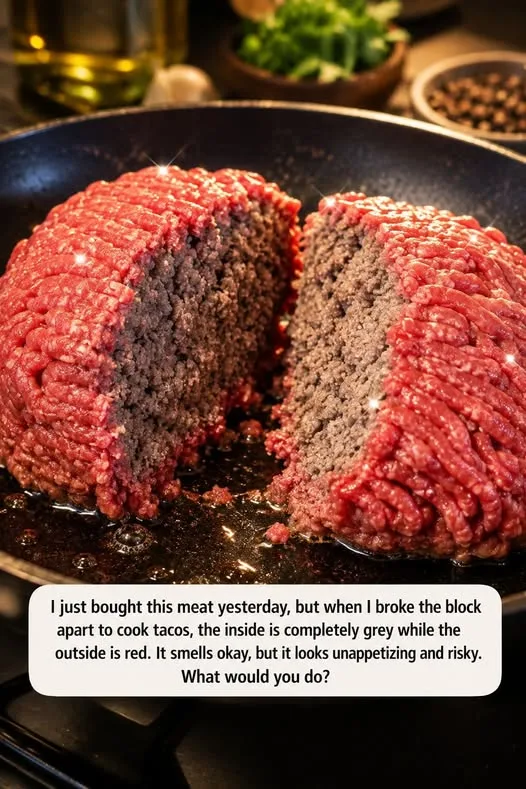
Opening a package of ground beef and discovering that the inside is gray while the outside remains bright red can be surprising. Many people immediately wonder whether the meat has spoiled, been contaminated, or is unsafe to eat. The good news is that color alone does not necessarily mean ground beef has gone bad.
Ground beef naturally changes color depending on how much oxygen reaches the meat. However, because ground beef is highly perishable and can contain harmful bacteria, you should consider more than appearance when deciding whether to cook or discard it.
Why Is the Outside Red?
The bright red color commonly associated with fresh beef comes from a protein called myoglobin. When myoglobin is exposed to oxygen, it forms a bright red pigment called oxymyoglobin.
This is why the surface of ground beef often looks red when you first see it in a package. The meat on the outside has direct contact with oxygen, so it can develop that familiar cherry-red appearance.
The red color can therefore be perfectly normal and does not automatically mean that the meat is exceptionally fresh.
Why Can the Inside Be Gray?
The center of a tightly packed block of ground beef receives much less oxygen than the surface.
Without much oxygen, myoglobin can exist in a different chemical state called deoxymyoglobin, which has a purple-red, dark red, or grayish appearance. When ground beef is packed closely together, the interior may not receive enough oxygen to develop the bright red color seen on the outside.
This can create a dramatic contrast: red on the exterior and gray or brownish-gray in the center.
If the meat was properly refrigerated and recently purchased, this color difference can occur naturally.
Does Gray Ground Beef Mean It Is Spoiled?
Not necessarily.
A gray interior by itself is not enough to determine whether ground beef is spoiled. Color changes can happen naturally because of oxygen exposure.
However, you should pay attention to other warning signs.
1. Check the smell
Fresh ground beef generally has a mild, meaty smell. If the meat has a strong unpleasant odor, sour smell, rotten smell, or another unusual odor, that is a reason to be cautious.
Remember that smell is not a perfect safety test. Harmful bacteria may sometimes be present without producing an obvious odor.
2. Check the texture
Fresh ground beef should be moist but not excessively slimy or sticky.
If the surface feels unusually slimy, sticky, or tacky, particularly together with an unpleasant smell or other signs of deterioration, it is safer to discard it.
3. Look for unusual discoloration
Gray or brown areas inside a compact package can happen because of limited oxygen.
But widespread abnormal discoloration, especially when combined with an unpleasant odor, sliminess, damaged packaging, or improper storage, should be treated more seriously.
What About Ground Beef Bought Yesterday?
Buying the meat yesterday does not automatically guarantee that it is safe today.
Food safety depends on several factors, including:
- How cold it was kept
- How long it was outside refrigeration
- Whether the package was damaged
- Its use-by or sell-by date
- How it was transported home
- Whether it was continuously refrigerated
- Whether it was previously frozen and thawed
If you brought the ground beef home and refrigerated it promptly, that is much better than leaving it at room temperature for an extended period.
When in doubt, check the package date and follow the storage instructions provided on the packaging.
Should You Cook It?
If the meat has been handled and stored properly and the only concern is that the interior is gray, the color alone does not necessarily mean you need to throw it away.
If you decide to use ground beef, cook it thoroughly. Ground beef should reach a safe internal temperature throughout the meat. For food safety, use a reliable food thermometer rather than judging doneness solely by color.
This is particularly important because grinding beef distributes bacteria that may have been present on the surface throughout the meat.
For ground beef, the commonly recommended safe internal temperature is 160°F (71°C).
After cooking, the meat should no longer be treated like raw beef. Use clean plates and utensils for the cooked food rather than putting cooked meat back onto surfaces that held raw meat.
Don’t Rely Only on Color
One of the biggest mistakes people make with ground beef is assuming that red automatically means safe and gray automatically means spoiled.
Neither assumption is reliable.
A bright red exterior can simply indicate oxygen exposure, while a gray interior can simply indicate limited oxygen exposure.
Similarly, bacteria that cause foodborne illness may not always produce an obvious change in color, smell, or texture.
That is why proper refrigeration, handling, expiration dates, and thorough cooking are more useful safety considerations than color alone.
When Should You Throw It Away?
When several warning signs appear together, it is better not to take chances.
Consider discarding ground beef if:
- It has a strong unpleasant or rotten odor.
- It has an unusually slimy or sticky texture.
- The packaging is swollen, leaking, or damaged.
- It was left unrefrigerated for too long.
- You know it was stored at an unsafe temperature.
- It has passed the recommended storage period.
- You are unsure how it was handled or stored.
If you are particularly uncertain about the history of the meat, throwing it away is often the safest choice.
How to Store Ground Beef Properly
Proper storage begins as soon as you purchase the meat.
Take ground beef home promptly and refrigerate it. Keep your refrigerator at 40°F (4°C) or below.
If you are not planning to use the beef within the recommended refrigerated storage period, freezing it is a practical option.
When freezing ground beef, use an airtight freezer-safe package or wrap it securely to reduce freezer burn and protect its quality.
When thawing frozen ground beef, use the refrigerator, cold water, or the microwave—not the kitchen counter.
Prevent Cross-Contamination
Raw ground beef can transfer bacteria to other foods, cutting boards, countertops, and utensils.
Wash your hands thoroughly after handling raw meat. Keep raw beef away from foods that will be eaten without cooking, such as salads, fruits, and ready-to-eat vegetables.
Use separate cutting boards or wash and sanitize surfaces properly after preparing raw meat.
Never place cooked tacos, burgers, or other finished foods onto a plate that previously held raw ground beef unless it has been properly washed.
The Bottom Line
Seeing ground beef that is red on the outside and gray inside can be completely normal. The difference is often caused by oxygen exposure and the way the meat is tightly packed.
However, color should never be your only test of safety.
If the meat has been properly refrigerated, is within its recommended storage period, has no suspicious odor or slimy texture, and has been handled safely, the gray interior may simply be a normal color change.
On the other hand, if the meat smells unpleasant, feels slimy, has been improperly stored, or you have reason to believe it has been exposed to unsafe temperatures, don’t risk eating it.
When preparing ground beef, cook it thoroughly to 160°F (71°C) and use a food thermometer for the most reliable check.
So, if you open a package and discover a gray center, don’t panic—but don’t ignore food-safety practices either. The gray color alone isn’t necessarily a warning sign; proper storage, handling, and cooking are what matter most.