Description
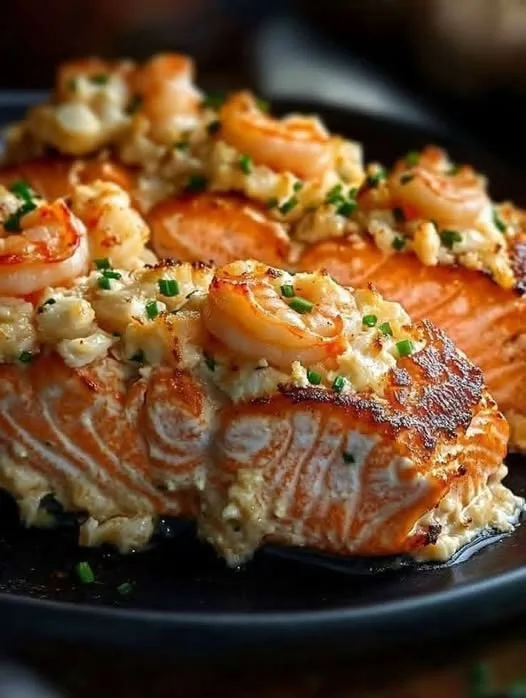
Crab and Shrimp Stuffed Salmon is an elegant seafood dinner that combines tender, flaky salmon with a savory filling of sweet lump crab meat, juicy shrimp, garlic, lemon, and herbs. Each bite brings together rich seafood flavor, a moist texture, and a fresh citrus finish, making this dish feel restaurant-worthy while remaining surprisingly simple to prepare at home. Naturally rich in protein and low in carbohydrates, this stuffed salmon recipe is a delicious option for anyone looking for a satisfying, high-protein, low-carb meal. Serve it with roasted asparagus, steamed broccoli, or a crisp green salad for a balanced dinner that looks beautiful on the plate.
Can This Crab and Shrimp Stuffed Salmon Support Weight Loss Goals?
Crab and Shrimp Stuffed Salmon can fit into a balanced eating plan because salmon, crab, and shrimp provide protein, which helps make meals satisfying. The recipe can also remain relatively low in carbohydrates when the filling uses seafood, herbs, lemon, and modest amounts of mayonnaise or cream cheese rather than breadcrumbs. Portion size and added fats still influence the total calories, so measuring ingredients can help you understand the meal’s nutritional content. Pairing the salmon with vegetables adds fiber and variety without requiring a heavy side dish. No single food guarantees weight loss, but this protein-rich seafood dinner can be part of a flexible, balanced eating pattern.
Does This Crab and Shrimp Stuffed Salmon Fit a High-Protein Lifestyle?
Yes, salmon, shrimp, and crab meat all contribute substantial protein, making this recipe a strong choice for a high-protein meal.
The seafood filling adds flavor and protein without needing a large amount of carbohydrate-rich ingredients.
With the quantities below, each serving provides approximately 45–50 grams of protein, depending on the seafood brands and exact portions.
Estimated net carbohydrates are around 3–5 grams per serving when the filling is made without breadcrumbs or added sugar.
It can suit a low-carb eating pattern, although the final nutrition depends on the amount and type of creamy filling used.
Why This Recipe Is Special
- Protein-packed seafood: Salmon, crab, and shrimp combine to create a satisfying meal with several sources of protein.
- Naturally low in carbohydrates: The filling relies on seafood, herbs, lemon, and a small amount of cream cheese rather than flour or breadcrumbs.
- Restaurant-style presentation: The stuffed salmon looks impressive without requiring complicated cooking techniques.
- Fresh, balanced flavor: Garlic, lemon, parsley, and paprika complement the richness of the salmon and sweetness of the seafood.
- Flexible side dishes: Serve it with roasted vegetables, cauliflower rice, or a fresh salad to complete the meal.
My Personal Experience
These points describe the recipe’s expected qualities rather than claiming personal kitchen testing.
- The seafood filling adds extra flavor.
Sweet crab and tender shrimp complement the salmon’s rich taste, creating a flavorful center in every serving. - Lemon keeps the dish tasting fresh.
A little lemon juice brightens the seafood filling and balances the salmon’s natural richness. - The filling is easy to customize.
Garlic, parsley, paprika, and a small amount of cream cheese make a savory filling that can be adjusted to your taste. - The presentation feels special.
A golden salmon exterior with a visible seafood center makes this dish suitable for guests or a special family dinner. - Vegetable sides complete the plate.
Broccoli, asparagus, or green beans add color, fiber, and texture while keeping the meal relatively low in carbohydrates.
Perfect For
- Weeknight dinners: The recipe uses straightforward preparation and cooks in around 25–30 minutes.
- Special occasions: Stuffed salmon looks elegant enough for birthdays, dinner parties, or holiday meals.
- High-protein meal planning: Salmon, crab, and shrimp offer a convenient combination of protein sources.
- Low-carb meal plans: The filling can be made without breadcrumbs, keeping the carbohydrate content relatively low.
- Meal preparation: Cooked portions can be refrigerated for short-term leftovers and paired with fresh vegetables.
- Family seafood dinners: Serve individual stuffed fillets with different side dishes so everyone can customize their plate.
Why You’ll Love This Recipe
- Flaky salmon with a creamy center:
The salmon stays tender when cooked carefully, while the filling adds a savory, moist texture.
Lemon and herbs brighten the rich seafood flavors. - A naturally protein-rich meal:
Salmon, shrimp, and crab all contribute protein without relying on protein powders or processed substitutes.
It is a practical option for anyone wanting a substantial seafood dinner. - Low-carb without sacrificing flavor:
The filling uses seafood, cream cheese, garlic, and seasonings instead of a breadcrumb-heavy mixture.
You can serve it with vegetables to keep the whole meal relatively low in carbohydrates. - Impressive but manageable:
The preparation involves mixing a filling, cutting a pocket in the salmon, and baking until cooked through.
The finished dish looks special enough for guests but is approachable for home cooks. - Easy to personalize:
Add extra lemon zest, paprika, parsley, or a pinch of chili flakes to adjust the flavor.
You can also use plain Greek yogurt in place of some cream cheese, though the filling will be less rich.
Common Mistakes to Avoid
- Cutting too deeply into the salmon: Make a pocket in each fillet without slicing all the way through, or the filling may escape during baking.
- Overfilling the fish: Use just enough filling to fit comfortably inside each pocket; bake any extra filling separately in a small oven-safe dish.
- Using watery seafood: Drain thawed shrimp and crab thoroughly so excess moisture does not make the filling runny.
- Overcooking the salmon: Check the thickest part with a food thermometer and remove it when it reaches a safe internal temperature of 145°F (63°C).
Required Equipment
- Sharp knife — Helps create a neat pocket in each salmon fillet without cutting through the sides.
- Mixing bowl — Makes it easy to combine the crab, shrimp, and seasonings evenly.
- Cutting board — Provides a stable, clean surface for preparing the seafood.
- Measuring cups and spoons — Keep the filling proportions consistent for reliable results.
- Baking dish or rimmed baking sheet — Holds the stuffed fillets securely during baking.
- Food thermometer — Helps confirm the salmon reaches a safe internal temperature.
- Small spoon — Makes it easier to fill the salmon pockets without tearing the fish.
Storage Instructions
- Refrigerator: Place cooked leftovers in a shallow, airtight food-safe container and refrigerate within 2 hours of cooking. Store at 40°F (4°C) or below and consume within 3–4 days.
- Freezer: For best texture, freeze the cooked salmon in individual portions in freezer-safe airtight containers or wrap it tightly before placing it in a freezer bag. Use within 2–3 months for best quality.
- Thawing: Thaw frozen portions in the refrigerator rather than on the counter.
- Reheating: Reheat in an oven at 300°F (150°C), covered loosely, until the center reaches 165°F (74°C). Check the temperature to avoid overheating and drying out the fish.
- Keeping it protein-rich: Store the salmon separately from vegetable sides and sauces so you can portion each component as needed.
- Freshness reminder: Do not leave cooked seafood at room temperature for more than 2 hours, or 1 hour when the surrounding temperature is above 90°F (32°C).
Recipe Details
- Preparation Time: 15 minutes
- Cooking Time: 20–25 minutes
- Total Time: Approximately 40 minutes
- Servings: 2
- Best Season for This Recipe: All-season
- Total Calories (Per Serving): Approximately 450–550 calories, depending on the size of the salmon fillets and the amount of cream cheese or mayonnaise used
Short 3-Line Description
Tender salmon fillets filled with sweet crab meat, juicy shrimp, garlic, herbs, and lemon.
A satisfying, high-protein seafood dinner with very few carbohydrates and plenty of flavor.
Perfect for weeknight meals, special occasions, and elegant low-carb dinners at home.
📝 Ingredients
For the Salmon
- 2 salmon fillets, 6 oz (170 g) each, preferably thick-cut and skin-on or skinless
- 1 teaspoon olive oil
- ¼ teaspoon salt, or to taste
- ¼ teaspoon black pepper
- ½ teaspoon paprika
- ½ teaspoon garlic powder
- 1 tablespoon fresh lemon juice
For the Crab and Shrimp Filling
- ½ cup (about 55 g) lump crab meat, picked over for shell fragments
- ½ cup (about 70 g) small cooked shrimp, peeled, deveined, and finely chopped
- 2 tablespoons cream cheese, softened
- 1 tablespoon mayonnaise
- 1 tablespoon finely chopped fresh parsley
- 1 garlic clove, minced
- 1 teaspoon lemon zest
- 1 teaspoon fresh lemon juice
- ¼ teaspoon paprika
- ⅛ teaspoon black pepper
- A small pinch of salt, if needed
Optional Garnish
- Lemon wedges
- Extra chopped parsley
- A light sprinkle of paprika
Ingredient notes:
- If using frozen shrimp, thaw completely and pat dry before chopping.
- Check crab meat carefully for small shell fragments.
- For a lighter filling, replace some of the cream cheese or mayonnaise with plain Greek yogurt; this changes the texture and nutrition.
- For a strict gluten-free meal, verify that all packaged ingredients are labeled gluten-free.
Directions
- Preheat the oven.
Heat the oven to 400°F (200°C). Lightly grease a baking dish with a little olive oil or use a suitable nonstick baking dish. - Prepare the seafood.
Pat the salmon dry with paper towels. If the shrimp is cooked and thawed, drain it thoroughly and chop it into small pieces. Check the crab meat for any shell fragments. - Make the filling.
In a mixing bowl, combine the crab meat, chopped shrimp, softened cream cheese, mayonnaise, parsley, minced garlic, lemon zest, lemon juice, paprika, black pepper, and a small pinch of salt. Stir gently until combined, keeping some of the crab pieces intact for texture. - Create pockets in the salmon.
Place each fillet on a cutting board. Using a sharp knife, carefully cut a horizontal pocket into the thickest side of each fillet, leaving the ends and bottom intact so the filling stays inside. - Season the salmon.
Rub the fillets with olive oil and season the outside with salt, black pepper, paprika, garlic powder, and lemon juice. Use a moderate amount of salt because the crab and mayonnaise may already contain sodium. - Stuff the fillets.
Divide the crab and shrimp filling evenly between the two salmon fillets. Spoon it into each pocket without packing it too tightly. If needed, secure the opening with a toothpick and remove it carefully before serving. - Bake until cooked through.
Arrange the fillets in the prepared dish with space between them. Bake for approximately 20–25 minutes, depending on thickness. The salmon should become opaque and flake easily with a fork, and the center should reach 145°F (63°C) on a food thermometer. - Check the filling.
Make sure the center of the stuffing is thoroughly heated. If the salmon finishes cooking before the filling is hot, loosely cover the dish and continue baking briefly, checking frequently to prevent the fish from drying out. - Rest and garnish.
Allow the salmon to rest for about 2–3 minutes. Sprinkle with fresh parsley and serve with lemon wedges, roasted asparagus, steamed broccoli, or cauliflower rice. - Serve for a high-protein meal.
Pair each stuffed fillet with a generous serving of non-starchy vegetables. The salmon and seafood filling already provide substantial protein, so additional protein ingredients are not necessary unless you prefer them.
Nutrition Facts (Per Serving – Approximate)
Estimated for one stuffed salmon fillet with half the filling, based on the ingredients listed. Actual values vary by salmon size, seafood brands, and mayonnaise or cream cheese used.
- Calories: 500 kcal
- Fats: 29 g
- Cholesterol: 180 mg
- Sodium: 650 mg
- Potassium: 950 mg
- Total Carbohydrates: 4 g
- Fiber: 0.5 g
- Net Carbs: 3.5 g
- Sugars: 1 g
- Protein: 48 g
- Calcium: 100 mg
Nutrition figures are estimates, not laboratory-tested values. For more accurate numbers, calculate using the specific products and measured quantities you use.
Notes
- Keep the filling cold until needed: If preparing ahead, refrigerate the filling and stuff the salmon shortly before baking.
- Use a thermometer: Salmon thickness varies, so temperature is a more reliable guide than cooking time alone.
- Reheating: Warm leftovers gently in a covered oven-safe dish at 300°F (150°C) until they reach 165°F (74°C).
- Allergy notes: This recipe contains fish, shellfish, egg (in many mayonnaise brands), and dairy. Check product labels and avoid ingredients that are unsafe for anyone eating the meal.
- Flavor boosts: Add fresh dill, extra lemon zest, a little Dijon mustard, or a pinch of chili flakes for a different flavor profile.
- Lower-sodium option: Choose lower-sodium crab meat and mayonnaise, and season gradually after tasting the filling.
- Texture tip: Mix gently to preserve some larger pieces of crab and shrimp rather than turning the filling into a paste.
- Serving idea: Roasted asparagus, sautéed spinach, or steamed broccoli makes a colorful side while keeping the meal low in carbohydrates.
Frequently Asked Questions
1. Can I use imitation crab meat instead of lump crab?
Yes, imitation crab can work, but it often contains added starches and sugar, so the carbohydrate content and flavor may change.
2. Can I prepare Crab and Shrimp Stuffed Salmon ahead of time?
Yes, you can prepare the filling and refrigerate it separately, then stuff and bake the salmon shortly before serving.
3. Can I use raw shrimp in the filling?
Yes, if the shrimp is peeled, deveined, finely chopped, and fully cooked inside the stuffing; check the center carefully and use a thermometer to confirm safe cooking.
4. How do I know when the salmon is done?
The thickest part should reach 145°F (63°C), and the flesh should appear opaque and flake easily with a fork.
5. Is this recipe keto-friendly?
It can fit many low-carb eating patterns when made without breadcrumbs or sugary sauces, but check ingredient labels and calculate the carbohydrates in your specific filling.
6. What can I serve with stuffed salmon?
Roasted asparagus, steamed broccoli, sautéed spinach, cauliflower rice, or a fresh green salad all pair well with the rich seafood filling.