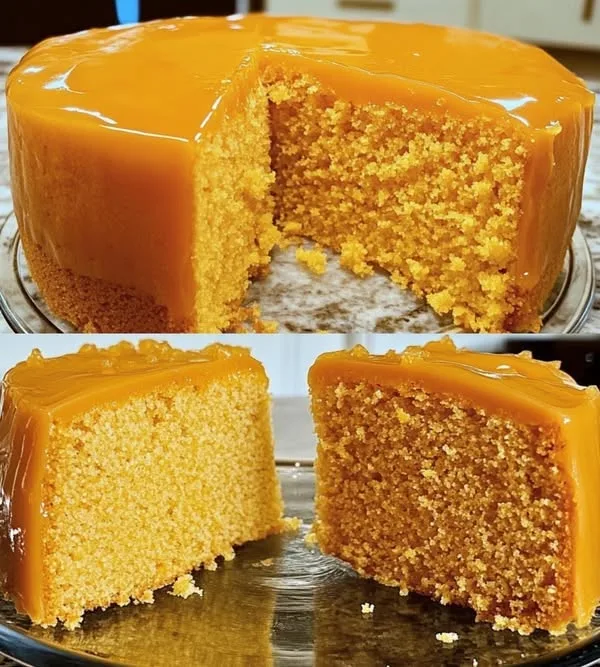
This Diabetic-Friendly Orange Cake is a soft, fragrant citrus dessert designed with less added sugar and a more balanced carbohydrate profile than a traditional orange cake. Fresh orange zest and juice provide plenty of natural citrus flavor, while almond flour and Greek yogurt help create a tender, moist crumb. It is a delicious option when you want a lighter lower-sugar, protein-friendly orange dessert without giving up the bright flavor of fresh oranges.
Important: “Diabetic-friendly” does not mean carbohydrate-free or suitable for everyone with diabetes. Portion size and individual carbohydrate needs matter. This recipe uses less added sugar, but the orange juice, flour, and sweetener still contribute carbohydrates.
Can This Diabetic-Friendly Orange Cake Support Weight Loss Goals?
It can fit into a balanced eating pattern when portioned appropriately. Almond flour and Greek yogurt provide some protein and fat, while reducing added sugar helps keep the recipe less sugar-heavy than a conventional cake. However, it is still a dessert, so total calories and carbohydrates should be considered alongside the rest of the meal.
Does This Recipe Fit a High-Protein Lifestyle?
This version is more protein-friendly than a traditional orange cake because it uses Greek yogurt, eggs, almond flour, and a small amount of protein-rich dairy.
The almond flour also provides more protein and fiber than standard white flour.
Net carbs are reduced by limiting added sugar and using a low-sugar sweetener.
For an even higher-protein cake, serve it with plain Greek yogurt rather than additional frosting or glaze.
Why This Recipe is Special
- Lower in added sugar: Uses a granulated sugar substitute instead of a large amount of regular sugar.
- Protein-friendly: Greek yogurt, eggs, and almond flour improve the protein profile.
- Bright orange flavor: Orange zest delivers concentrated citrus flavor.
- Moist texture: Greek yogurt helps keep the crumb tender.
- Lower-carb option: Almond flour reduces carbohydrates compared with a conventional flour-based cake.
My Personal Experience
- The orange zest gives this cake its strongest citrus character.
It makes the cake taste bright and fragrant without needing lots of sugar. - Greek yogurt keeps the crumb pleasantly moist.
It also adds a little protein without making the cake heavy. - I prefer a light orange yogurt topping rather than a sugary glaze.
It keeps the dessert fresh and creamy while complementing the citrus. - Small slices are surprisingly satisfying.
The almond flour and yogurt make the cake more substantial than a typical light sponge.
Perfect For
This cake is ideal for lower-sugar desserts, diabetic-conscious meal planning, afternoon tea, brunch, family gatherings, birthdays, holiday dessert tables, citrus season, and portion-controlled sweet treats.
Why You’ll Love This Recipe
- Less added sugar
A sugar-free granulated sweetener provides sweetness without using a large amount of table sugar. - Naturally citrusy
Fresh orange zest gives the cake an intense aroma and flavor. - Protein-friendly ingredients
Eggs, Greek yogurt, and almond flour make it more nutritionally balanced than many traditional cakes. - Soft and moist
Greek yogurt and almond flour help create a tender texture. - Easy to portion
A small 8-inch cake can be divided into controlled servings.
Common Mistakes to Avoid
- Using too much orange juice — Orange juice contains natural sugar and excess liquid can make the cake dense.
- Adding regular sugar to the glaze — This can significantly increase the carbohydrate content.
- Overbaking the cake — Almond flour can become dry if baked too long.
- Using a sweetener without checking its conversion ratio — Different sugar substitutes vary in sweetness and volume.
Required Equipment
- 8-inch round cake pan — Creates an evenly sized cake with consistent baking.
- Fine citrus zester — Extracts flavorful orange zest without bitter pith.
- Mixing bowls — Keep the wet and dry ingredients easy to combine.
- Whisk — Smoothly incorporates the eggs and yogurt.
- Wire rack — Allows the cake to cool evenly without trapped steam.
Storage Instructions
Store the completely cooled cake in an airtight container in the refrigerator for up to 4 days, especially if using the optional yogurt topping.
For freezing, wrap individual unglazed slices tightly and place them in a freezer-safe container for up to 2 months.
Thaw refrigerated or at room temperature. If desired, warm an unglazed slice gently before serving.
Recipe Details
- Preparation Time: 15 minutes
- Cooking Time: 30–35 minutes
- Total Time: 50 minutes
- Servings: 10 slices
- Best Season: All-season
- Total Calories (Per Serving): Approximately 185 calories (estimate)
Short Description
This lower-sugar Orange Cake has a soft almond-flour crumb, fresh orange zest, and a subtle natural citrus sweetness.
Greek yogurt and eggs add protein and moisture while a sugar substitute keeps added sugar low.
It is a portion-friendly dessert for those looking for a diabetic-conscious, lower-carb option.
📝 Ingredients
Orange Cake
- 1½ cups (168 g) fine almond flour
- ½ cup (120 g) plain unsweetened Greek yogurt
- 3 large eggs
- ⅓ cup (65 g) granulated sugar substitute suitable for baking
- 2 tablespoons fresh orange juice
- 1 tablespoon finely grated orange zest
- 2 tablespoons unsweetened almond milk
- 1 teaspoon vanilla extract
- 1 teaspoon baking powder
- ½ teaspoon baking soda
- ¼ teaspoon salt
- 1 tablespoon olive oil or melted coconut oil
Optional Orange Yogurt Topping
- ½ cup plain unsweetened Greek yogurt
- 1 teaspoon orange zest
- 1–2 teaspoons sugar-free powdered sweetener, optional
- 1 teaspoon fresh orange juice
Ingredient notes: Choose a baking sweetener that measures similarly to sugar unless the package specifies otherwise. Avoid sweetened yogurt or sweetened almond milk, as these can add unnecessary carbohydrates.
Directions
- Preheat the oven — 5 minutes
Preheat to 175°C/350°F. Grease an 8-inch round cake pan and line the bottom with parchment paper. - Prepare the dry ingredients — 2 minutes
Whisk almond flour, baking powder, baking soda, and salt together. - Combine the wet ingredients — 3 minutes
In a separate bowl, whisk eggs, Greek yogurt, sugar substitute, orange juice, orange zest, almond milk, vanilla, and oil. - Combine the batter — 2 minutes
Gradually add the dry mixture to the wet ingredients. Stir gently until just combined. Texture cue: The batter should be thick but easily spreadable. - Transfer to the pan — 1 minute
Spread the batter evenly into the prepared cake pan. - Bake — 30–35 minutes
Bake at 175°C/350°F until the center is set and a toothpick inserted into the middle comes out mostly clean. Visual cue: The top should be lightly golden and spring back gently when touched. - Cool — 20 minutes
Let the cake cool in the pan for approximately 10 minutes, then transfer it to a wire rack. - Prepare the topping — 2 minutes
Mix Greek yogurt, orange zest, orange juice, and optional sugar-free sweetener until smooth. - Finish the cake — 5 minutes
Once completely cooled, spread a thin layer of the yogurt topping over the cake. - Serve
Cut into 10 portions and serve chilled or at room temperature.
Nutrition Facts — Per Serving (Approximate)
| Nutrient | Amount |
|---|---|
| Calories | ~185 kcal |
| Fat | ~13 g |
| Cholesterol | ~60 mg |
| Sodium | ~150 mg |
| Potassium | ~180 mg |
| Total Carbohydrates | ~9 g |
| Fiber | ~3 g |
| Net Carbs | ~6 g |
| Sugars | ~2 g |
| Protein | ~8 g |
| Calcium | ~80 mg |
Approximate values include the cake but not the optional yogurt topping. Actual carbohydrate values depend heavily on the sweetener and yogurt used.
Notes
- Diabetes note: Check the nutrition label of your sweetener and other packaged ingredients because carbohydrate content varies.
- Portion size matters: Keep servings consistent if you are tracking carbohydrates.
- Storage: Refrigerate for up to 4 days.
- Freezing: Freeze unglazed slices for up to 2 months.
- Allergy notes: Contains eggs, dairy, and almonds/tree nuts.
- Nut-free option: A suitable diabetic-conscious flour blend can replace almond flour, but the nutrition values will change.
- Dairy-free option: Use unsweetened dairy-free yogurt, although protein content may be lower.
- Flavor boost: Add cardamom, cinnamon, vanilla, or a little lemon zest.
- Avoid sugary glaze: A thin Greek-yogurt topping keeps the recipe lower in added sugar.
- Sweetener caution: Sugar alcohols and other alternative sweeteners can affect people differently; follow the product’s serving guidance.
Frequently Asked Questions
1. Is this orange cake suitable for people with diabetes?
It is designed as a lower-sugar option, but individual blood-glucose responses vary, so portions and personal dietary recommendations should be considered.
2. Does this cake contain added sugar?
The recipe uses a baking-appropriate sugar substitute instead of conventional granulated sugar.
3. Can I use regular flour instead of almond flour?
Yes, but the carbohydrate, fiber, calorie, and protein values will change considerably.
4. Can I make this cake without the yogurt topping?
Absolutely; the cake is delicious on its own and omitting the topping reduces calories and carbohydrates.
5. Is orange juice okay in a lower-sugar cake?
A small amount is used primarily for flavor, while most of the orange character comes from the zest.
6. How can I make it even higher in protein?
Serve it with plain Greek yogurt or incorporate a suitable unflavored or vanilla protein powder while adjusting the dry ingredients as needed.